



Landscape design brings together planting, structure, levels and materials to make an outdoor space that works as well as it looks, extending indoor living outwards rather than stopping at the threshold. Put more plainly, its purpose is to fit what people build into what was already there.
The range is wider than the term suggests. A landscape architect might be working on a roof garden of a few square metres, on green infrastructure across an entire city, on an indoor park, or on the remediation of a former mine site. That spread is part of why the profession has been rediscovering its importance.
Training and entry
Routes into the profession vary considerably by country. In the United States, practice generally requires a degree from a programme accredited by the Landscape Architectural Accreditation Board, a period of supervised experience, and a pass in the Landscape Architect Registration Examination, with the specific requirements set state by state. The American Society of Landscape Architects is the professional body most often cited alongside it.
Elsewhere the structure differs, sometimes substantially, though the underlying expectation is consistent: a formal qualification, supervised practice, and registration before independent work.
Why the moment belongs to landscape architects
The case rests on a single quality. Landscape architects work holistically, understanding natural systems, the built environment, and the interface between the two. Very few professions sit across that boundary by default, and almost every pressing question about how land should be used now falls exactly on it.
The argument is not new. Twentieth century figures including Nan Fairbrother, Sylvia Crowe and Geoffrey Jellicoe pressed governments to treat the environment as an ecological and cultural continuum rather than as a series of separate problems. What has changed is that the wider world has caught up with them.
The profession is also unevenly distributed. Countries most exposed to flooding, drought and extreme heat frequently have the fewest practitioners relative to the scale of what needs designing, and questions of air, water, food and waste tend to be sharpest in exactly those places. Landscape architecture is the discipline best positioned to address them, which makes that imbalance the profession's most consequential problem.
Designing for mental wellbeing
Mental health has moved up the public health agenda across most of the world, and cities are looking for ways to balance physical and psychological wellness rather than treating them separately.
Outdoor space is one of the more reliable levers available. Green urban areas have been repeatedly associated with better health, and public space delivers unusually strong returns in community life and local economic activity for the money spent on it.
There is a second effect that is easier to miss. The relationship between a place and the community using it runs both ways. Where landscape architects deliberately shape shared public space, people encounter one another in it, and social connection accumulates from there. Places grow out of what people need and do, which is why a well-designed square keeps working and a poorly designed one empties.
Residents and businesses increasingly name green public space and an active streetscape among the things that make somewhere worth being. That expectation is now part of the brief rather than an addition to it.
Designing for a changing climate
Climate adaptation has become the practical centre of the work. Coastal landscapes face rising sea levels. Higher rainfall intensity and more frequent storms put the built environment at greater risk of flooding. Unpredictable weather asks landscapes to withstand conditions they were not originally designed for.
Design has to anticipate the unexpected, which reaches all the way down to material selection. Hardscape has to tolerate temperature fluctuation, saturation and drying without degrading, and in coastal or tropical conditions that is a demanding requirement rather than a routine one.
Material durability alone is no longer sufficient. Green roofs have moved from novelty to standard consideration, reducing flood risk by holding rainfall, cutting reliance on conventional heating and cooling, improving a building's thermal performance, and adding character to a skyline in the process. Planting is moving indoors on the same logic.
A green infrastructure approach pulls these together. Vegetation, microclimate and topography are treated as parts of one system, which lowers flood risk, protects building fabric, and improves human comfort as rainfall intensifies and temperatures rise.
Landscape architecture and urban planning are not the same
The two are frequently confused, and the distinction is worth stating clearly.
Urban planners establish what a community needs and recommend where different functions should sit. The work is highly analytical, driven by data, and often statutory, and planners are found in architectural and engineering practices as well as in government.
Landscape architects design the spaces themselves, working on layout, levels, planting, materials and detail. The disciplines overlap constantly and collaborate on most large schemes, but neither contains the other, and planning projects are typically the larger in geographical scale.
Where the term came from
The phrase landscape architecture dates to 1828, coined by Gilbert Laing Meason in a book on the landscapes in Italian painting. John Claudius Loudon, the horticulturist and planner, took it up and gave it currency. The theorist Andrew Jackson Downing, an admirer of Loudon's work, carried it further.
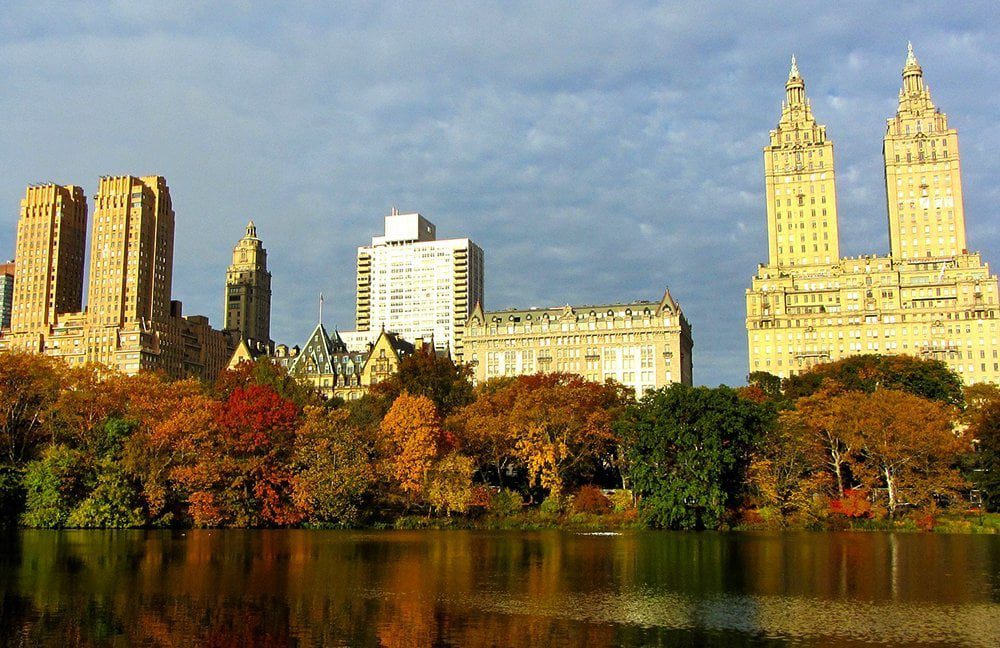
It was Frederick Law Olmsted who turned it into a profession, adopting the term to describe what he did and giving it a scope Meason never intended. Central Park, the work most associated with him, was designed with Calvert Vaux, and the partnership matters, since the collaboration between them is closer to how landscape architecture is actually practised than the image of a single designer.
Four challenges the profession still faces
Going green without losing function
Every practice now wants to work sustainably, which secures the profession's future but complicates the daily work. Choosing the right material and the right technique takes real effort, particularly in harsh environments. Coastal conditions punish both planting and hardscape, and the question of how quickly a material will degrade has to be answered before it is specified. Environmental impact, function, cost and beauty all have to be held together, and none of them can be sacrificed quietly.
Understanding culture
To understand the vocation of a place, a designer first has to understand the people using it. Open space works differently in the United States, in Korea, in Singapore and everywhere else, and those differences run down to colour and form and what each signifies locally. Reading that correctly is what separates a space people want to occupy from one they walk through.
Being valued properly
Landscape architects remain undervalued relative to neighbouring professions, and pay reflects it. That is a plausible contributor to the shortage of practitioners. The work is not garden design, and it is not something anyone can do. If the discipline holds part of the answer to flooding, heat and urban health, the valuation should follow.
Keeping up
Staying current is a permanent obligation, across digital tools, construction materials and technique, while maintaining hard technical skills in site engineering and grading. The breadth that makes landscape architects valuable is also what makes the profession demanding to stay in.

Where materials meet the argument
Most of what is described above eventually arrives at the ground plane, where a scheme either holds together or does not. Drainage has to move increasing volumes of water. Surfaces have to stay safe when wet and stable through temperature swings. Tree pits have to keep roots alive in compacted urban ground.
Jonite was founded on that last stretch of the problem. Reinforced stone grates and tree grates are made from roughly 95% natural aggregates with at least 30% recycled content and less than 1% silica, steel-reinforced for load and finished for slip resistance, so that the drainage a scheme depends on does not interrupt the surface it sits in. Get in touch with our team to discuss a specification, or request samples to see how the material sits against a paving scheme.


