



Buildings have always been asked to outlast the people who commission them, and materials are what decide whether they do. That question has sharpened as weather patterns grow less predictable and structures face conditions they were not designed for.
Durability alone is not the test. A material has to age well as well as last, since a building that survives fifty years looking worse each one has only half succeeded. The six below have all been in use for centuries, and each has a particular way of getting older.
Stone
Stone is the oldest structural material still in general use, and the reason is straightforward: it resists deformation, weathers slowly, and does not burn.
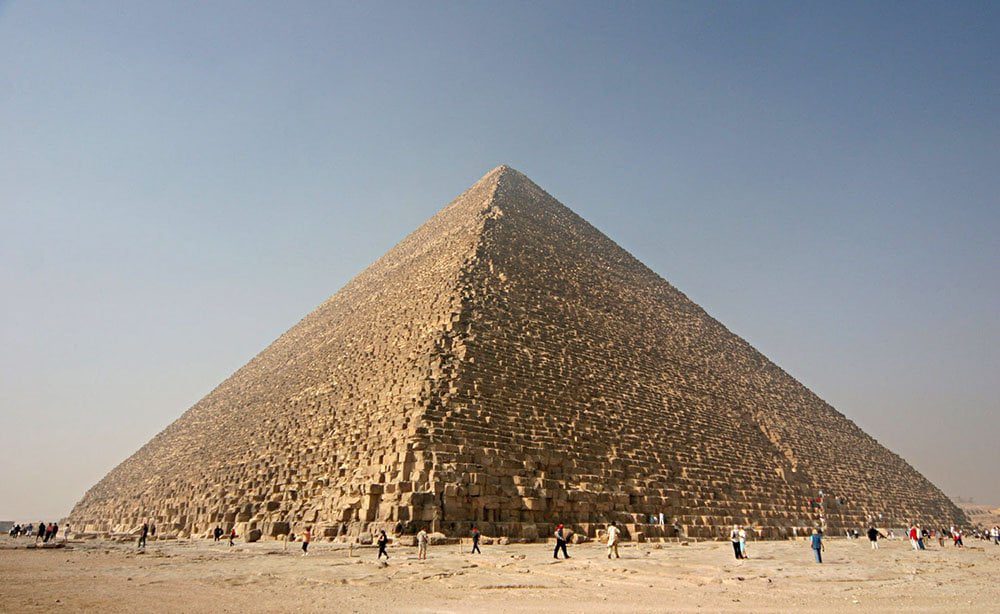
Ancient Egypt built almost entirely in granite and limestone. The Great Pyramid at Giza, raised around 2560 BC from limestone blocks, is the last of the ancient wonders still standing. It was originally finished in smooth casing stones, stripped over the centuries for houses and temples elsewhere, which is why the structure now reads as rough and blocky rather than as the polished object it was.
Modern construction has largely displaced stone with cheaper materials, reducing it to decorative cladding and small feature elements. Steel and timber frames are faster and cheaper to build, and stone is now specified for appearance more often than for structure.
Marble
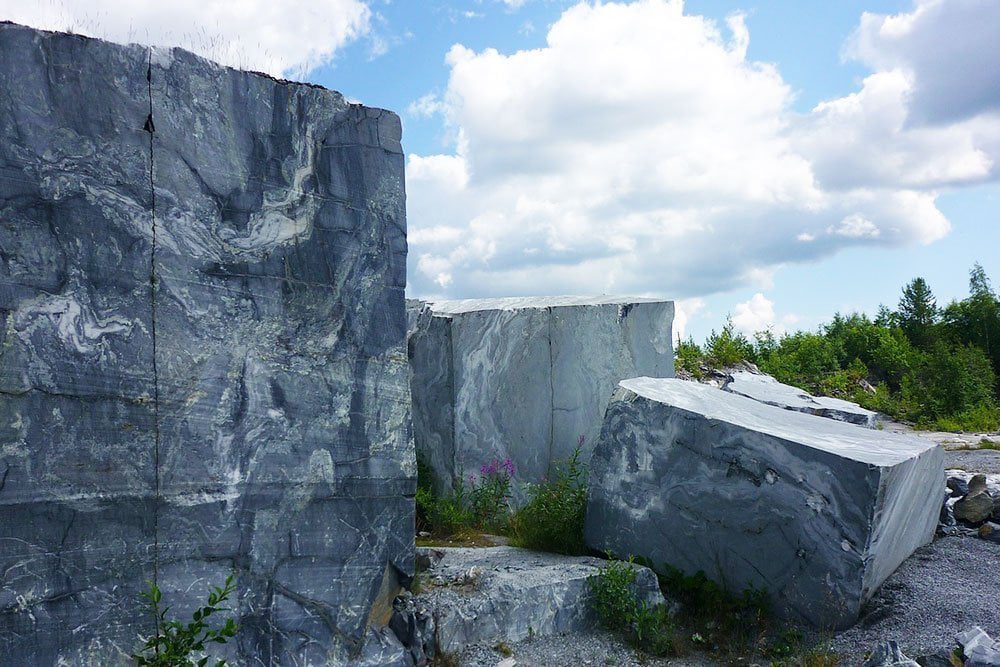
Marble takes its name from the ancient Greek marmaron, meaning shining stone. It forms when limestone is subjected to heat and pressure, recrystallising the original carbonate grains into an interlocking mosaic of crystals.
Colour comes from what was in the limestone to begin with. Pure white marble is the product of pure limestone. Sand, clay and iron oxides produce the swirls and veining, and green colouring generally indicates a magnesium-rich limestone or dolostone. Ashgabat in Turkmenistan holds the record for the highest concentration of white marble buildings in one city.
Greek and Roman architects used it extensively. The Temple of Artemis at Ephesus, another of the seven wonders, was built almost entirely in marble and carried on 127 columns roughly eighteen metres high. Only fragments and the foundations survive.
Marble remains a signal of expense and restraint, and no two pieces are identical, which is both its appeal and its difficulty as a specified material. It is imitated often enough that faux marbling is a trade of its own.
Pine
Pine grows across the northern hemisphere and in parts of the southern, thrives in acidic soil, and regenerates readily after fire. The tallest recorded specimen, a ponderosa pine in southern Oregon, stands at around 82 metres.
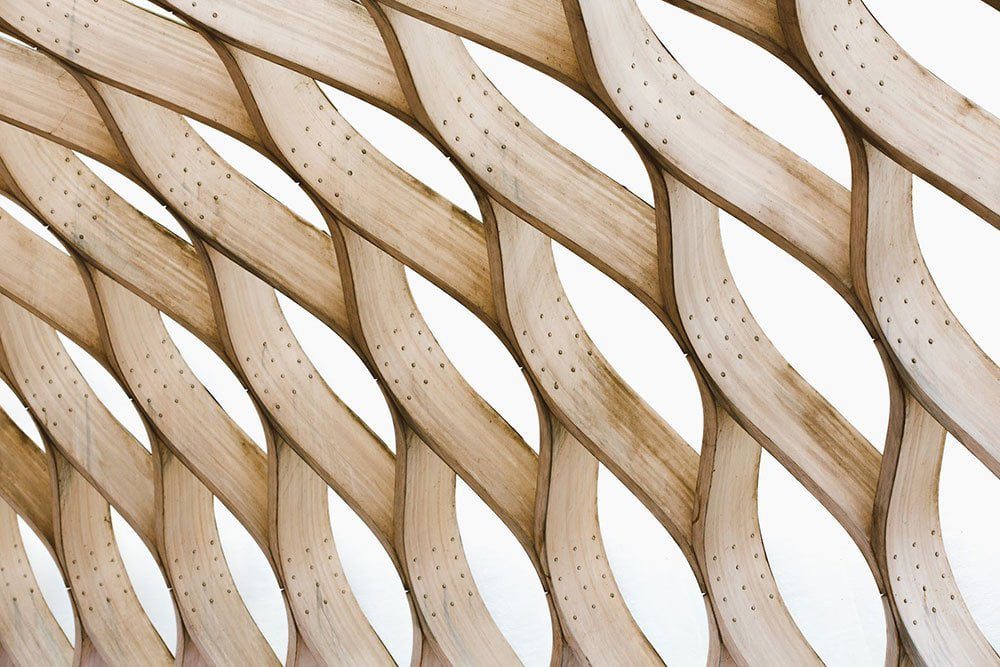
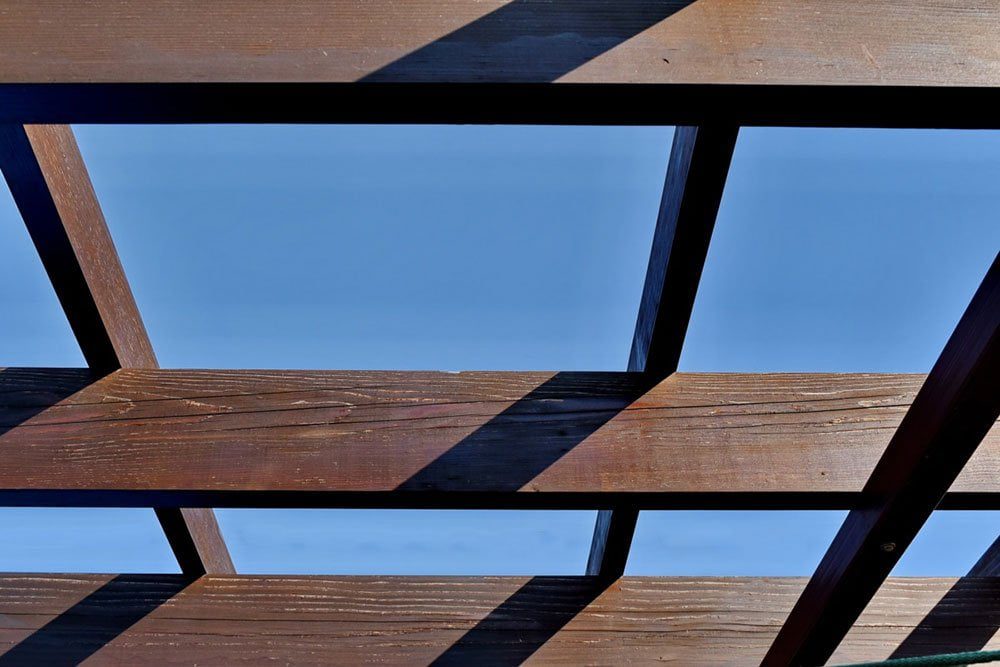
As a building material it is light, easy to cut to length and structurally capable, which makes it a mainstay of framing, flooring, joinery and furniture. Left exposed, it develops a grey-blue sheen over time, and oiling slows that silvering by improving its resistance to ultraviolet light.
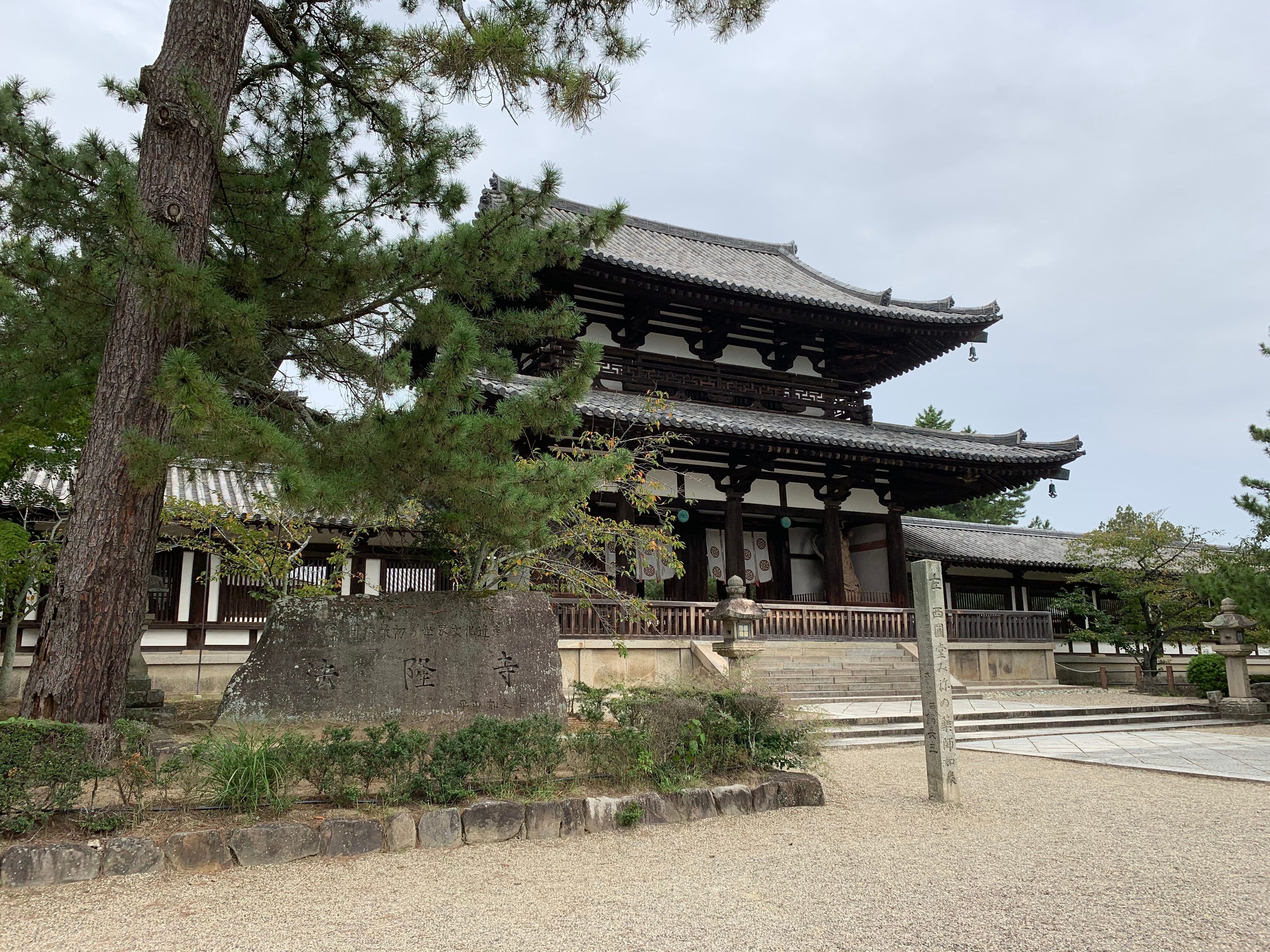
Pine is less resistant to insects and decay than teak, which is why it is generally kept to interior work. Timber in general remains vulnerable to fire, moisture and termites, and it nonetheless outlasts most expectations. Hōryū-ji in Nara, Japan, is generally recognised as the oldest surviving wooden building in the world, its main structures dating from around the beginning of the eighth century.
Teak
Teak takes its name from the Tamil tekku. It grows across South and South East Asia, particularly in India, Myanmar and Thailand, where tropical conditions suit it, and mature trees typically reach thirty to forty metres.
It was used by communities across the region for houses, tools and furniture long before it was traded commercially, and plantation cultivation began in Sri Lanka in the seventeenth century. Teak pillars and structural members are common in the palaces of the region, and the timber was widely used in shipbuilding for the same reason it works outdoors.
The properties are unusual. Teak is high in natural oils and tannic acid, which makes it strongly resistant to rot, fungus and mould. It is dimensionally stable and slow to shrink, silvers gracefully when left untreated, and needs very little maintenance. It appears in outdoor furniture and bench seating for all of those reasons, and it is thicker and richer in appearance than pine.
The caution is supply. Tropical hardwood has to be responsibly sourced, or the specification contributes to deforestation and to the displacement of the communities living in it.
Weathering steel
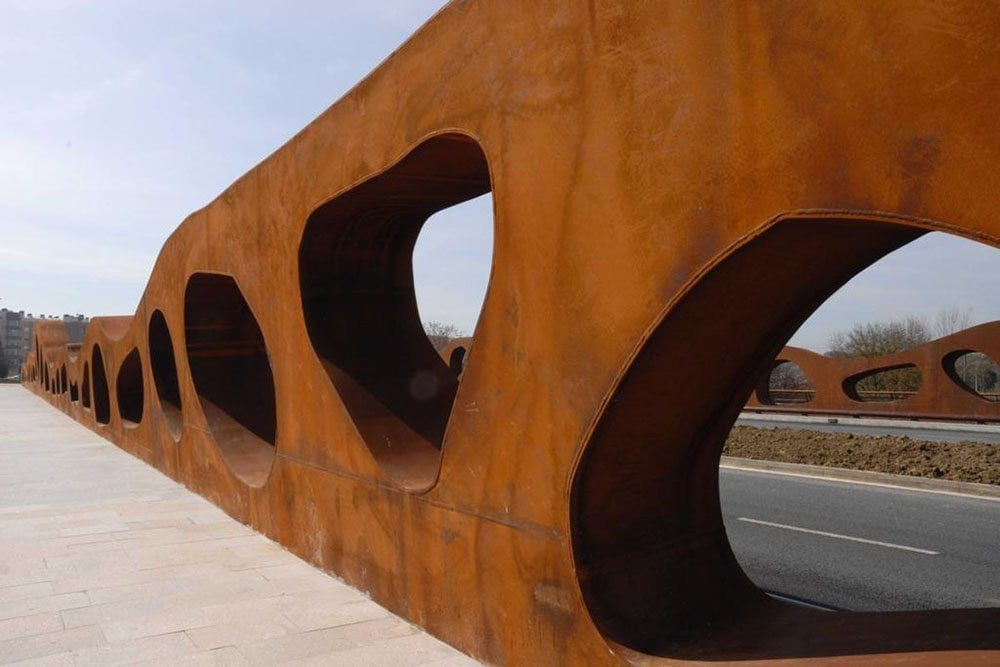
Weathering steel, widely known by the trade name Corten, is a family of steel alloys developed so that painting becomes unnecessary.
Its chemical composition forms a stable oxide layer on the surface as it corrodes, and that layer then protects the steel beneath from further atmospheric corrosion. The result looks like rust and behaves like a coating, developing over roughly four to six months into colours ranging through orange, red, brown and near black depending on the local climate.
Eero Saarinen brought it into architecture in 1964 at the John Deere World Headquarters in Moline, Illinois, and the main building of the University of Southern Denmark in Odense is clad in it.
It has a clear limitation. The protective layer depends on wet and dry cycles to form and stabilise, so persistently damp conditions and marine environments with high chloride levels prevent it from working as intended. The Omni Coliseum in Atlanta was demolished after around twenty five years, with corrosion of its weathering steel among the reasons cited.
Copper
Copper was among the first metals humans worked, used by the Greeks and Romans for tools and ornament, and recorded in antiquity as a means of treating wounds and keeping water clean. Modern research supports the underlying observation, and the US Environmental Protection Agency has registered certain copper alloys as antimicrobial surfaces.
Architecturally it is valued for corrosion resistance and workability. It can be soldered, polished and formed to almost any profile, which is why it appears in roofing, cladding, pipework and electrical systems alike.
Its ageing is the most recognisable of any material here. Exposed copper develops a pale green patina of copper carbonates and sulfates, which then protects the metal beneath, and the Statue of Liberty is the most photographed demonstration of the process. Bronze behaves similarly, with warmer undertones beneath the green.

Choosing for the long term
A building that lasts has to survive weather, flooding, rot, insects and the daily wear of the people using it, and no single material handles all of that everywhere. Weathering steel fails in the wrong climate. Timber needs protection from termites. Stone is heavy and slow to build with.
The judgement is therefore local. A material has to suit the specific climate and environment it will sit in, and it has to age in a way the design can accommodate, which is a different question from whether it will still be standing.
Jonite was built on that second question. Reinforced stone grates and floor drains are made from roughly 95% natural aggregates with at least 30% recycled content and less than 1% silica, steel-reinforced for load and finished for slip resistance, developed so that a drainage component weathers in step with the stone around it rather than staining, corroding or drawing attention as it ages. Get in touch to discuss a specification, or request samples to see how the material behaves alongside natural stone.


