



Architecture is the art form most people encounter without choosing to. It surrounds daily life, and yet the point at which a building becomes art is difficult to fix, because architectural invention rarely comes from following a set of rules. The ambition is to make a building hold an idea.
Few architects have held an idea as visibly as Antoni Gaudí. His work is recognisable at a glance, built on light, colour and volume, and it remains among the most visited architecture anywhere.
The man and the method
Antoni Gaudí i Cornet was born in Reus, Catalonia, on 25 June 1852. Three interests shaped everything he built: architecture, nature and religion.
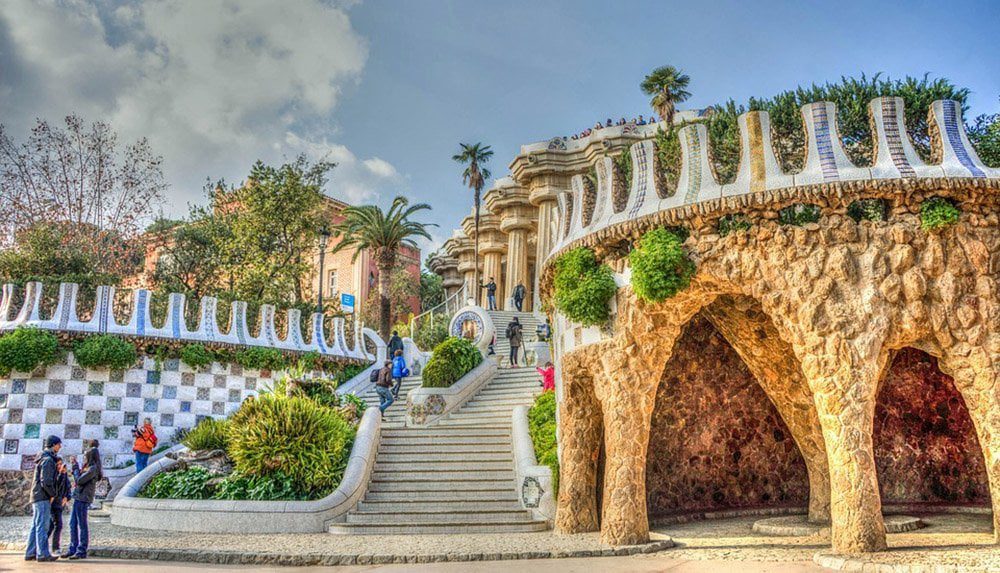
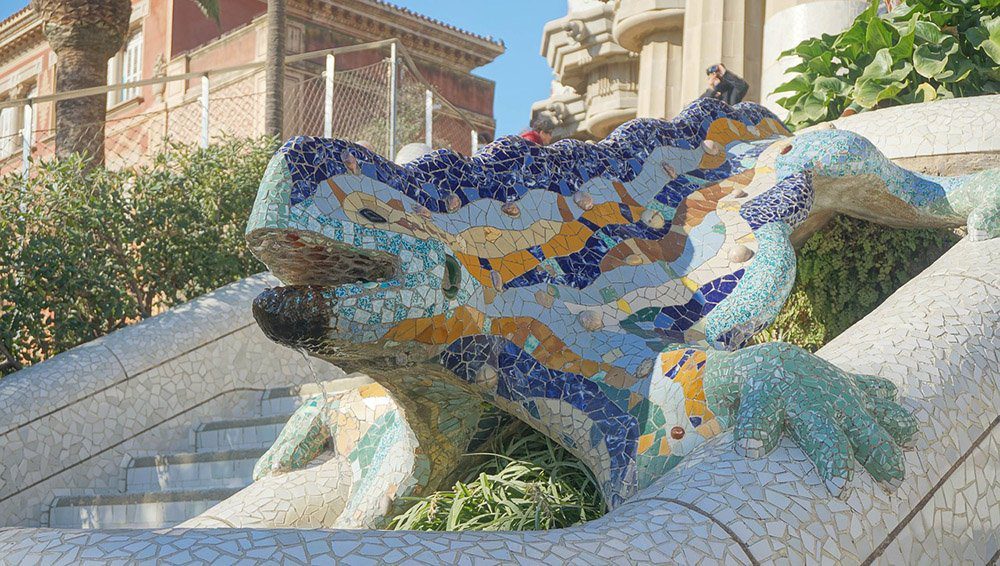
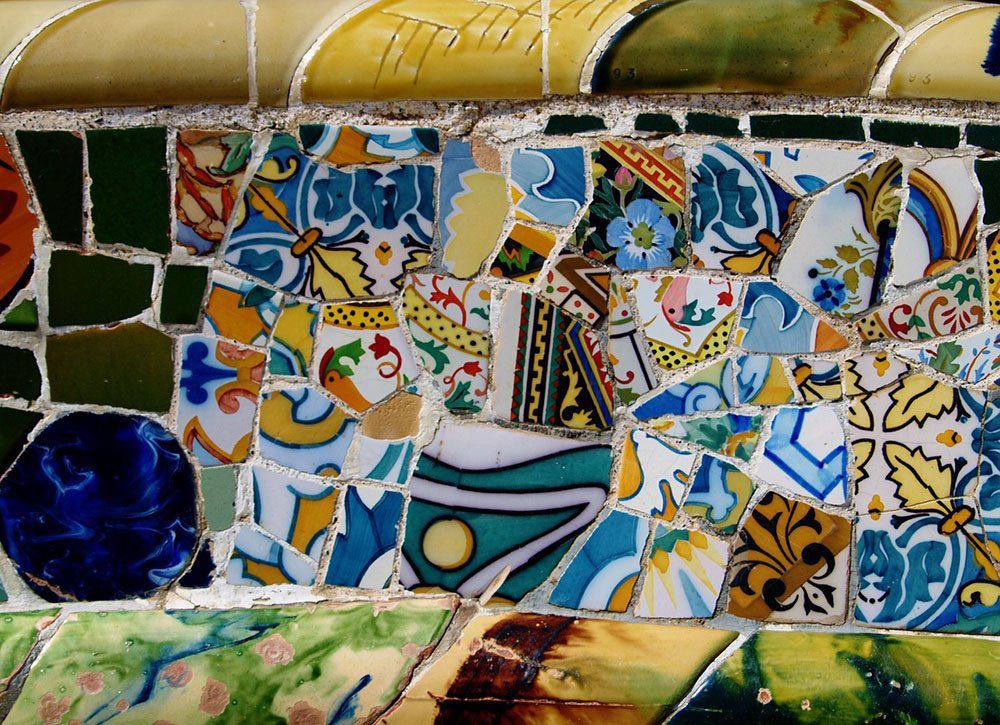
He was meticulous, and unusually willing to bring craft trades into the work itself, incorporating ceramics, stained glass, wrought ironwork and carpentry rather than treating them as finishes applied afterwards. He also developed new ways of handling material, most famously trencadís, in which waste ceramic, tile shards and broken chinaware are set in mortar to form a mosaic.
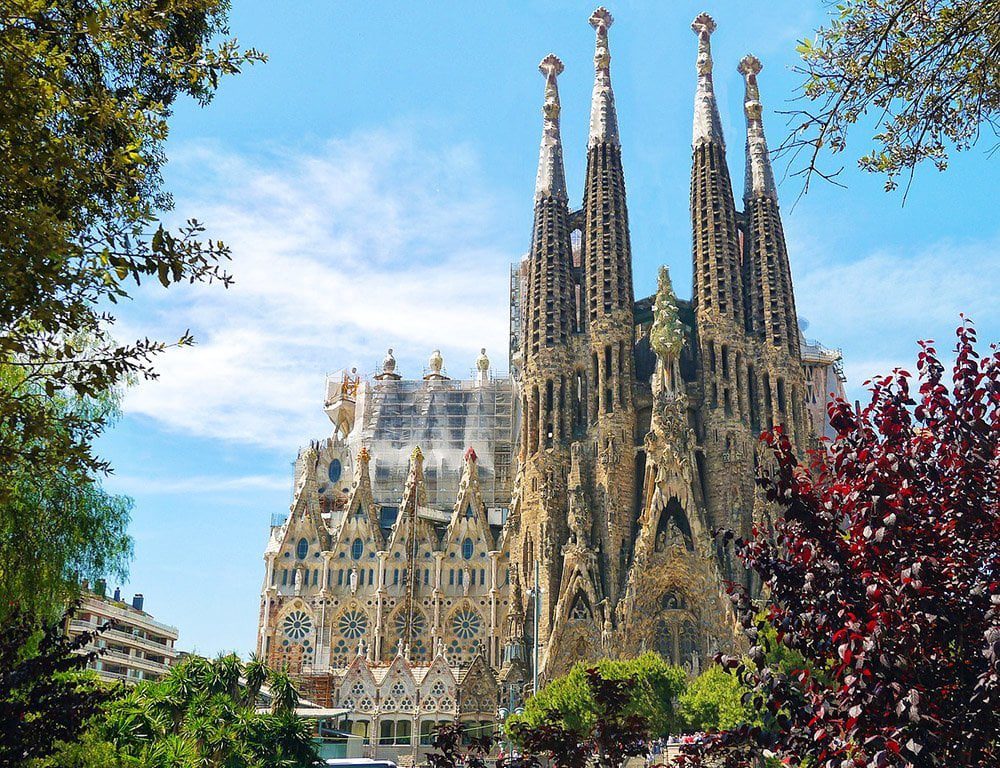
Barcelona holds almost all of it, including the Sagrada Família, still unfinished and the most visited monument in Spain. Gaudí remains the best known practitioner of Catalan Modernism.
Beginnings and a decisive patron
Gaudí moved to Barcelona in 1870 to study architecture, financing it by working as a draughtsman for architects and builders including Leandre Serrallach, Emili Sala Cortés and Francisco de Paula del Villar y Lozano. His ability opened doors early, and he collaborated with several of his own professors before graduating from the Barcelona Higher School of Architecture in 1878.
By then his ideas were plainly more than a restatement of what he had studied. At the Paris World's Fair of 1878 he showed a display cabinet made for the glove manufacturer Comella, and its modernista handling of function and ornament caught the attention of the Catalan industrialist Eusebi Güell.
That meeting shaped the rest of the career. Güell commissioned the Güell wine cellars, the Güell Pavilions, the Palau Güell, Park Güell and the crypt of the church at Colònia Güell. Working with that degree of patronage, Gaudí produced one major building after another through his mature period, including the Bellesguard Tower, Casa Batlló, Casa Milà and, above all, the Sagrada Família.
Colour as a structural idea
Gaudí's mature work treats colour as something integral rather than applied. Different materials are combined and colour is placed deliberately to change how a building reads, an approach visible earlier in El Capricho and Casa Vicens in the late nineteenth century, where coloured tile is set against plain brick and stone in a chequerboard rhythm.
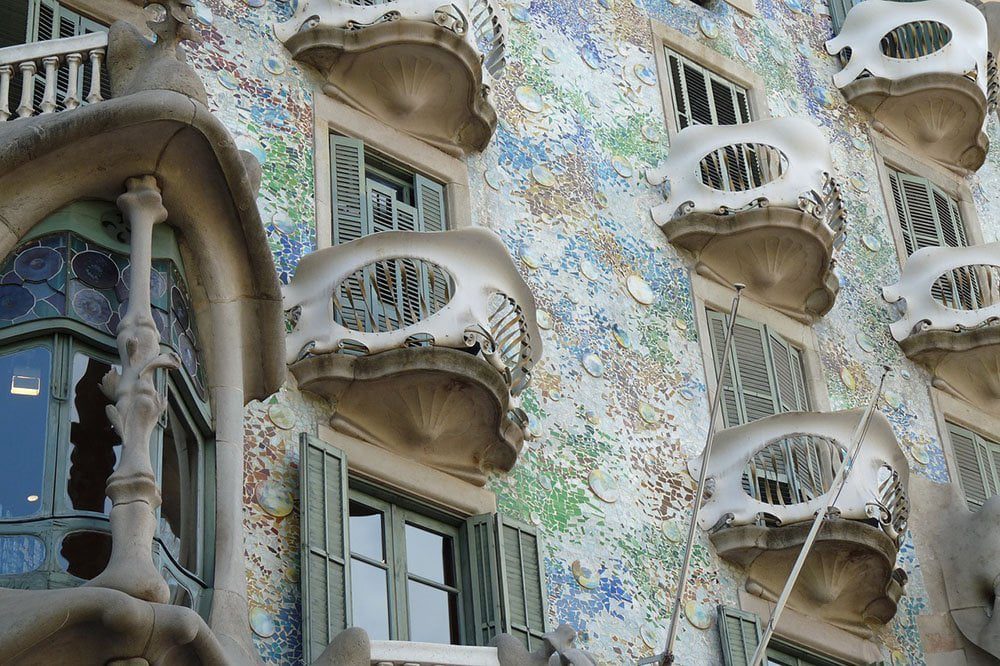
Casa Batlló is where the idea reaches full expression. Much of the facade is faced in trencadís mosaic made from broken ceramic tile, predominantly green and blue, drawn from the surface of the sea, with small foam-like forms rising across the balconies and window frames.
The roof carries the strongest reading. Warm white, yellow, orange and red tiles line the inside, and the ridge is formed to resemble the spine of a dragon, a sequence of green and blue ceramic tiles joined by orange and red cylindrical pieces. The colours signal the arrival of spring after a hard winter, and the rebirth of the natural world with it.
What Catalan Modernism was
Gaudí arrived at modernism through neo-Gothic architecture and through the arts of the East, and he came to sit at the front of a movement with distinctly local motives.
Catalan Modernism has its roots in the Renaixença, the cultural revival that accompanied Barcelona's growing wealth and power in the nineteenth century. Catalonia sought to distinguish itself from Castilian Spain by asserting a national identity, restoring the Catalan language and importing modern ideas that would carry its society and culture into the twentieth century. The city drew on Art Nouveau, then current in England, France, Belgium and Germany, and reshaped it for its own purposes.
Its characteristics are consistent. The style is anti-classical, descended from Romanticism and inclined towards lyricism and subjectivity. Architecture and the applied arts are treated as continuous, with ornament carried across both. New materials produce a mixed constructional language, rich in contrast and strongly plastic in effect. Running through all of it is an optimism that reflected the prosperity of the city, and an aesthetic that belonged to its rising middle class.
Where the influences came from
Gaudí studied Egyptian, Indian, Persian, Mayan, Chinese and Japanese art through the photographic collection at the School of Architecture, which also held images of Moorish monuments in Spain. Those left the deepest mark, and traces of them run through El Capricho, the Palau Güell, the Güell Pavilions and Casa Vicens.
Islamic architecture gave him a specific idea he returned to repeatedly, which is spatial ambiguity. Openings and partitions divide a space into a sequence without ever closing it off, so that enclosure and openness coexist. Much of the interior character of his buildings depends on it.
He came to these ideas partly through the writers of the period, including John Ruskin and William Morris, whose arguments about craft and ornament were widely read among architects at the time.
The single largest influence was Eugène Viollet-le-Duc, the French architect and theorist of the Gothic Revival. From him Gaudí took the principle of adopting historic styles rationally, keeping structure and design as one problem rather than two. He judged Gothic construction to be practical in its structural solutions while finding the art of it incomplete, and that dissatisfaction pushed him towards modernism. The influence is clearest in Bellesguard and in the crypt and apse of the Sagrada Família.
The legacy
Gaudí's work moved past mainstream modernism into an organic language of his own, drawn from natural form. He preferred to model details in three dimensions as he conceived them rather than draw them in detailed plan, which is a large part of why the buildings resolve as they do.
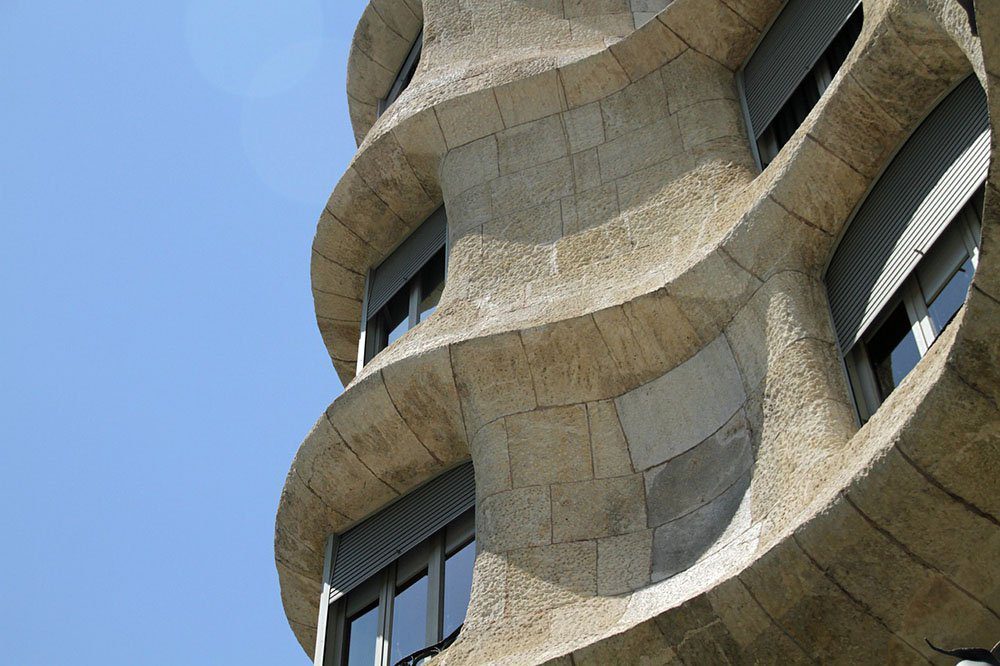
Nature gave him the curve over the straight line, varied texture and strong colour. The tree-like columns holding the interior of the Sagrada Família and the wave-like facade of Casa Milà, drawn from the multi-peaked mountain of Montserrat outside Barcelona, are the clearest cases. Baroque, Gothic, Moorish and Victorian influences run alongside, held together by tilework and by forms taken from the natural world.
Recognition was not immediate. The International Style that rose through the 1920s and 1930s stood in direct opposition to his thinking, and it was not until the 1960s that his reputation recovered internationally. It has not slipped since. Gaudí is now read as one of the most inventive figures in the history of architecture, and his work is inseparable from the city that holds nearly all of it.
Craft at ground level
What distinguishes Gaudí's buildings is a refusal to treat any element as beneath attention. Tile, ironwork, glass and stone are all designed rather than specified, and the buildings hold together because of it.
Jonite works in the same spirit at the point most schemes overlook. Reinforced stone grates and tree grates are made from roughly 95% natural aggregates with at least 30% recycled content and less than 1% silica, steel-reinforced for load and finished for slip resistance, with custom patterns developed for individual projects so drainage becomes part of a design rather than an interruption to it. Get in touch with our team to discuss a custom design, or browse the case studies to see the approach in finished work.


