



Architecture expresses itself through material. A building communicates through what it is made of before it communicates through anything else, which makes materiality less a finishing consideration than the medium the whole discipline works in.
The term is broader than a list of building products. In architectural discussion it covers the full range of materials a project calls on, and it extends to representational elements as well, including images, printed surfaces and applied graphics. Printed veneers make the point neatly, since a photographic image reaches a building only by being carried on a physical substrate. What separates the two is perception and the process of representation used to produce them, not a hard boundary between real and virtual.

Three stages from quarry to building
Materials work alongside structure to produce form, which makes them a precondition of building rather than a layer applied to it. Between extraction and installation, a material passes through three stages.
Selection
Determined by what the building has to do and by what the material can offer. Function sets the constraint, and the material's own possibilities set the opportunity.
Shaping
Governed by the properties of the material and by what the architect intends to express through it. A material that resists a particular operation will resist it regardless of the drawing.
Matching and assembly
Organised by the technology available at the time, by the application, and by the result expected. This is where separate materials become a single building.
Approached this way, materiality opens onto more inventive use than a specification exercise allows. Taking material qualities as a starting point, texture, elasticity, transparency, fluidity, shifts the attention onto operations rather than products: folding and bending, carving and cutting, weaving and knitting, mirroring and screening.
Knowledge that comes from handling
Shaping raw material into architecture is the architect's work, and the question is where the necessary knowledge comes from.
In an age of mass production it is tempting to assume scientific data is sufficient. Historically it was never available. Earlier builders worked without theoretical qualifications and learned instead by direct contact, kneading, touching, carving, chiselling and casting until they understood how each material behaved. That produced real expertise: which stone to use where, the hidden differences between basalt and granite, how much load a given structure would carry. It was empirical knowledge gathered from the behaviour of the material itself.
Contemporary practice needs both. Specific weight and thermal performance are necessary and insufficient. What concrete, steel and ceramic offer in texture, colour, touch and feel is knowledge of a different kind, and it is what allows an architect to choose confidently between two materials that perform identically on paper and to judge how one will meet another.
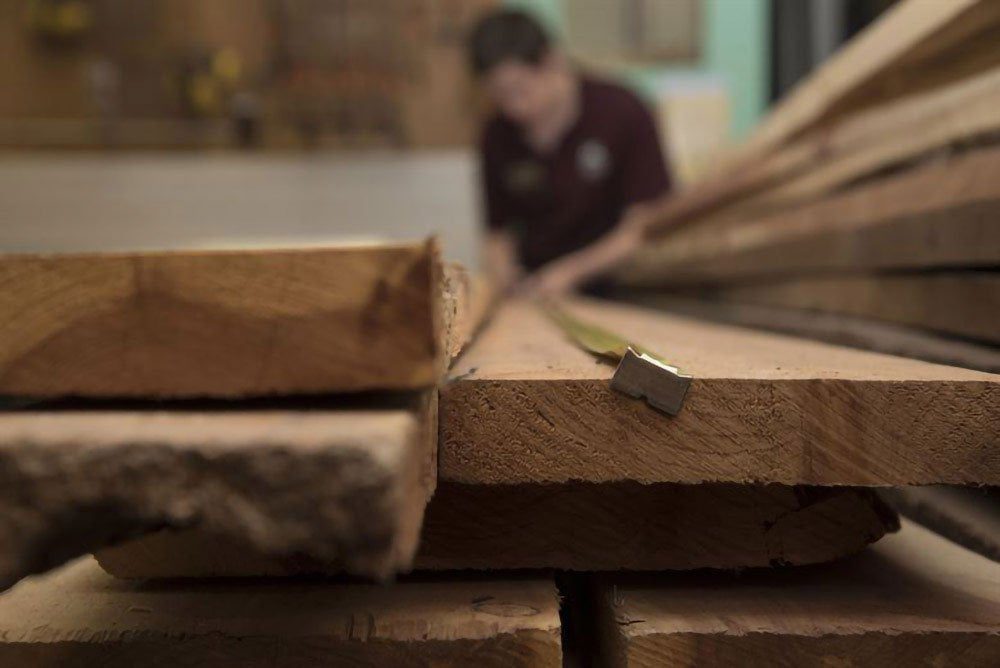
The limits of a catalogue
Materials are grouped into compositional units by their defining features, principally structure, formal system and colour. Distinguishing those properties reliably is something architects learn by experience rather than by reading.
Industry produces an enormous variety of building materials, and the practical consequence is that selection often happens entirely through catalogues and colour charts. That is a reasonable starting point and a poor finishing one. Understanding what a material can be shaped into, and how it behaves structurally, makes the decision faster and better, and it is the kind of understanding a swatch cannot convey.
The principle matters more as expectations rise. As mechanical production has spread, so has the expectation that both the material and the product made from it will carry genuine quality rather than the appearance of it.
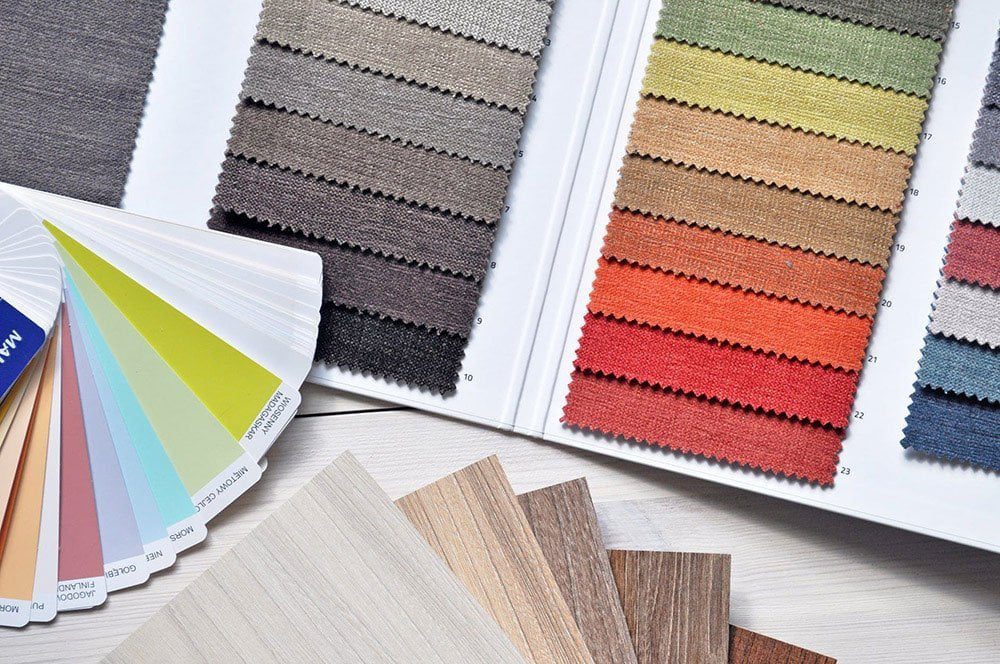
What quality means here
Quality can be understood as the measurable standard of a material's applicability and its aesthetic performance together.
During the handicraft period, production was limited to small batches made under close control of the hand. Minor irregularities in that work are evidence of direct human contact, and they are part of why handmade objects read as they do. Whether industrial production can carry the same quality is a genuine argument rather than a settled one. The position taken here is that series production earns its value when the material takes a form true to its own nature, with its character intact, and that this is achievable in manufacture rather than excluded by it.
The difficulty is that materials keep changing. New forms leave production continuously, and judging whether a given material is true to its content takes time that the pace of development does not always allow.
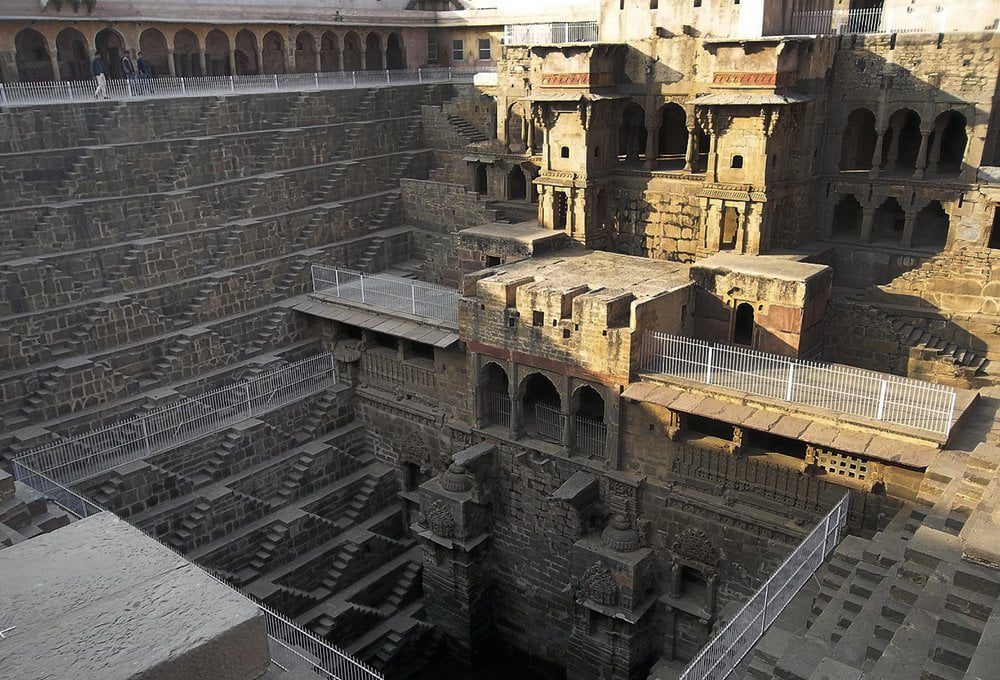
Working with the rules a material sets
Design draws on both the material and its forms of motion, taking account of chemical and physical parameters alongside technical and optical ones. Understanding those fundamentals is what allows architects and engineers to read a material's aesthetic possibilities rather than guess at them.
Alongside the principle of materiality sits a related idea, sometimes called the economy of nature: particular materials will only produce particular forms under particular conditions. A dry stone wall demonstrates it. Stone stacked on a narrow face is unstable, and builders learned across generations to bed each stone on its broadest face, which is why walls built without mortar have stood for centuries. The rule was not imposed on the material. It was discovered in it.
Only work made with attention to those rules can be considered faithful to its content. A material fits into a piece of architecture when its fundamental properties genuinely meet the demands placed on it, and it becomes a carrier of aesthetic value at the point where it makes those underlying rules legible.
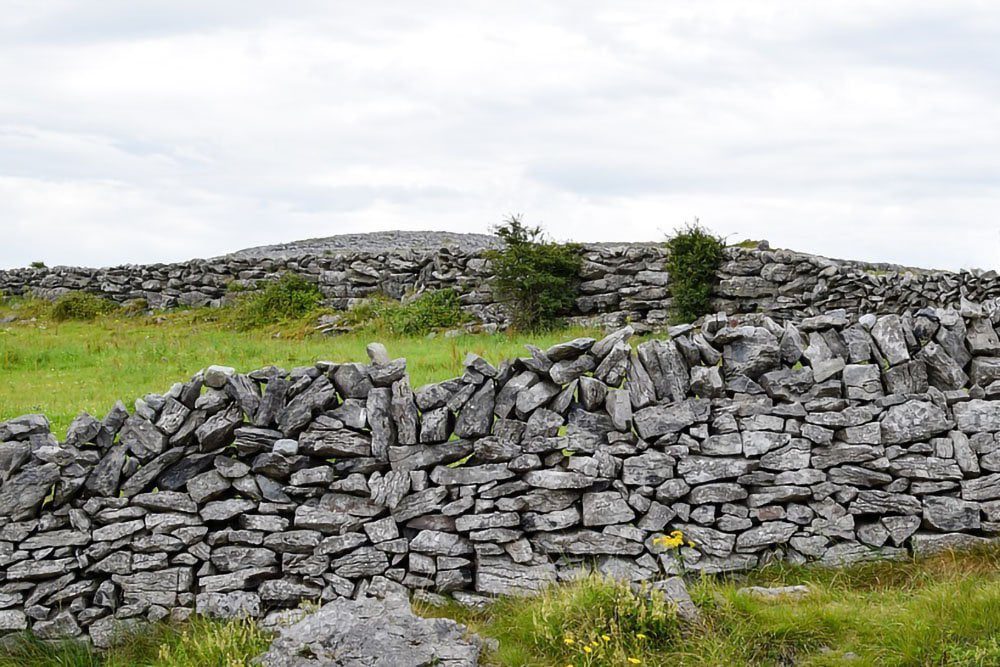
Bringing out what is already there
Practical experience and theoretical understanding are both required, and neither substitutes for the other. The natural beauty of a material does not surface in a building by accident.
Timber, textile, concrete, brick, stone, ceramic, fire clay and aluminium are all used inside and out, and it is easy to assume they simply arrive in the form and colour they are seen in. They do not. Reaching that point takes deliberate work, and following the principle of materiality is what allows an architect to draw out aesthetic properties that would otherwise stay hidden in a material's internal structure.
This is the problem Jonite was set up to solve at the ground plane. Reinforced stone grates are made from roughly 95% natural aggregates with at least 30% recycled content and less than 1% silica, steel-reinforced for load and finished for slip resistance, so that a drainage component reads and feels like the stone around it rather than announcing itself as something else. Request samples to judge the material by handling it, or get in touch with our team to discuss a specification.


