



A stone is a natural solid aggregate of one or more minerals. Granite, for instance, combines quartz, feldspar and biotite. That combination has been a working resource since the beginning of human civilisation, and the availability of particular stones in particular places has shaped cultural and technological development ever since.
The relationship is older than building. For at least 2.5 million years, humans and earlier hominids have worked stone into tools, the practice archaeologists call lithic technology and the longest continuously used technology there is. Knowing which rock fractures predictably, and how to strike it, was the first material science.
Marble, granite, slate and limestone specified today were formed over geological timescales, moved by continental drift, earthquakes and volcanic activity, and some carry the fossilised remains of shells, fish, animals and plants. Three rock types account for all of it, and the way each forms explains how each behaves.
Three formations, three characters
Sedimentary rock
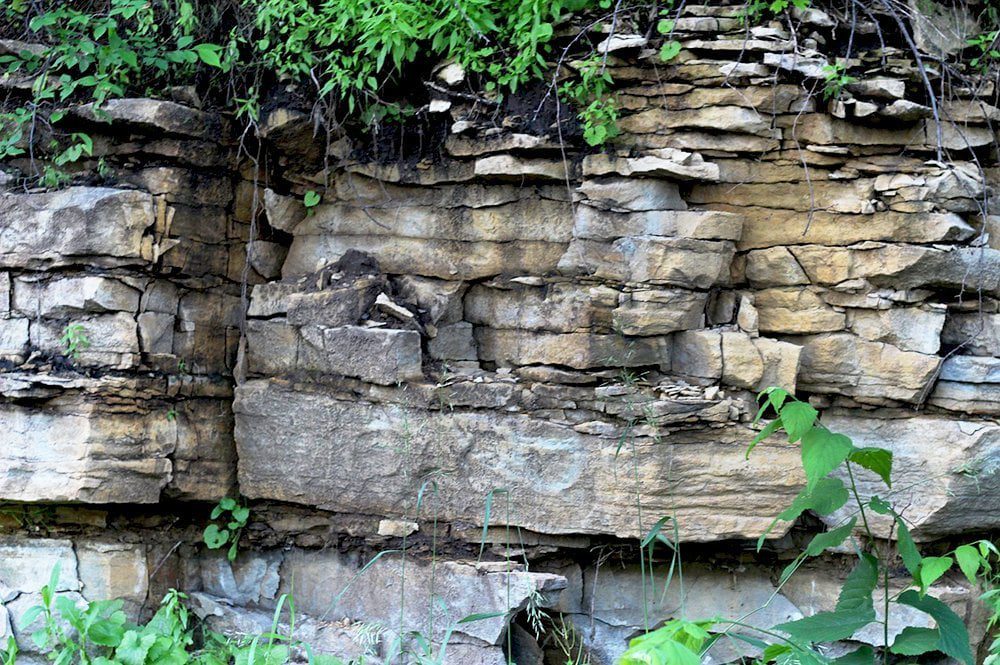
Sedimentary rock forms when earth materials are washed or blown into place, then settle and compress over time into a single mass. Limestone and travertine are among the results. Stones drawn from former riverbeds and seabeds carry the record of that formation visibly in the slab, which is a large part of their appeal.
Igneous rock
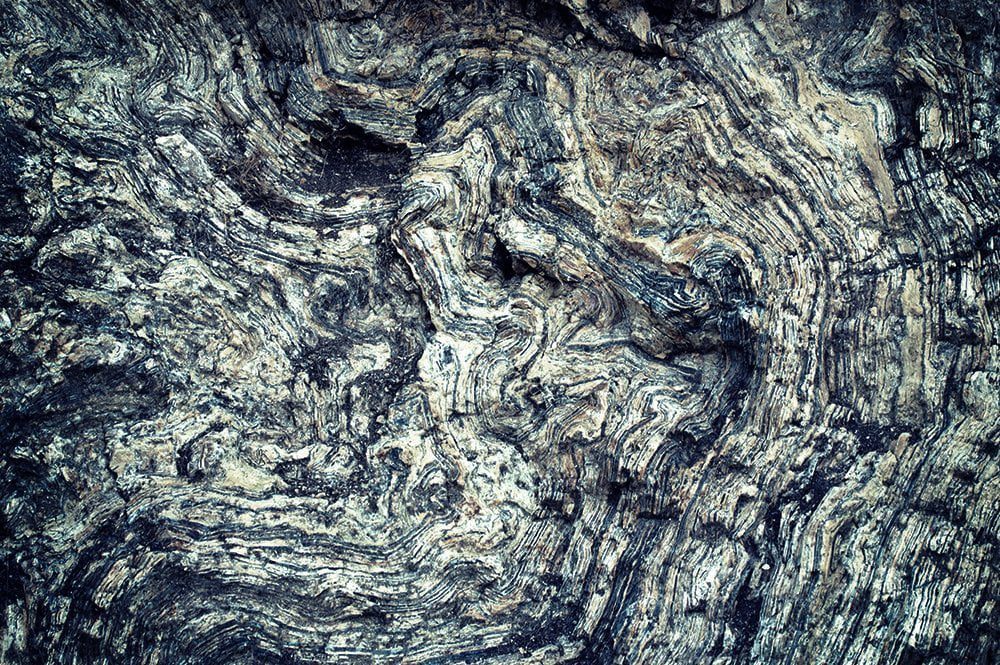
Igneous rock is cooled and solidified magma, trapping complex mineral structures as it hardens. The crystals may align into flowing layers or scatter at random, and both produce striking effects once the surface is cut and polished. Granite is the most commonly extracted igneous material, rigid and hard-wearing, and the breadth of colour available in it comes directly from the range of minerals it locked in as it cooled.
Metamorphic rock
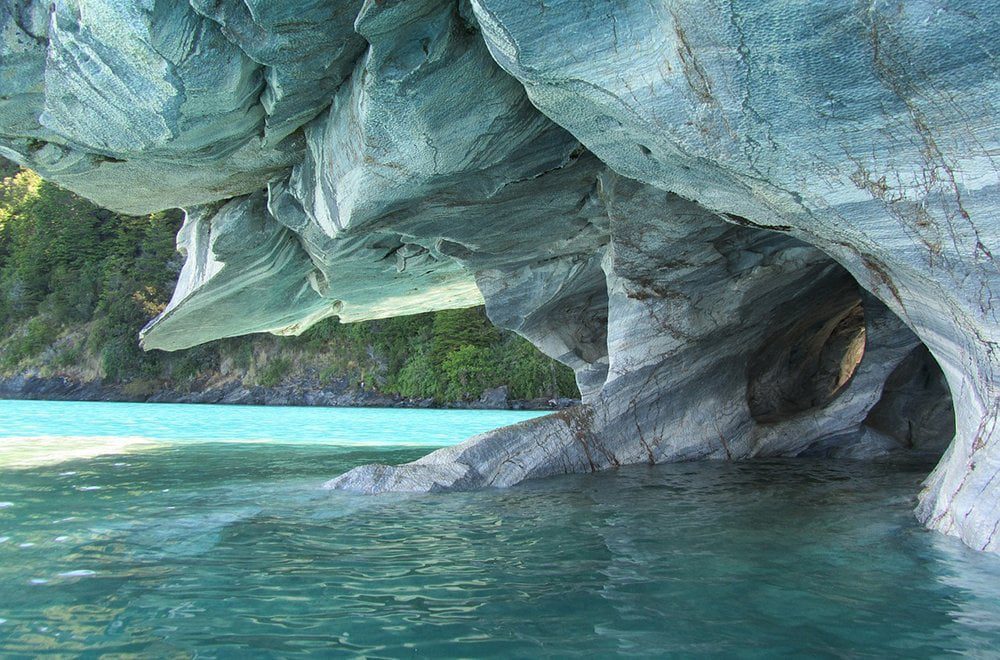
Metamorphic rock is sedimentary or igneous stone that has been subjected to intense heat and pressure beneath the crust. Depth matters. Stone formed far below the surface tends to carry the richest colour combinations, and marble frequently shows where it has been stretched, compressed and fractured. Slate forms nearer the surface, which makes it a lower-grade stone in geological terms rather than a lesser one in use.
Egypt, precision at scale
Ancient Egypt, along the lower Nile, quarried extensively and built almost entirely in granite and limestone.
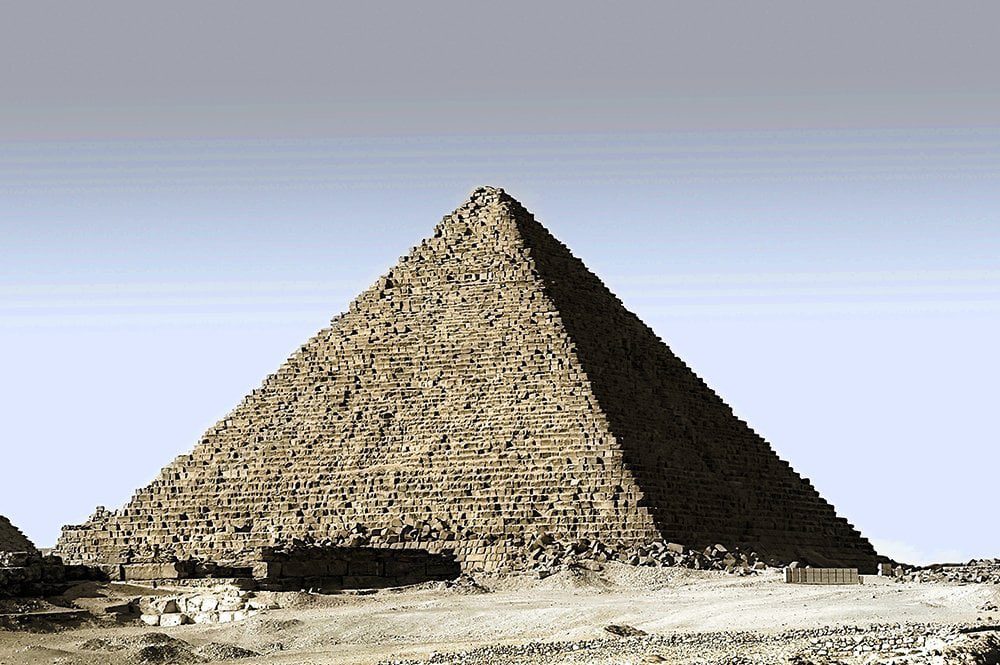
The Great Pyramid at Giza, the last surviving wonder of the ancient world, was raised around 2560 BC from massive limestone blocks. Visitors today describe it as blocky and rough, but that is not how it was finished. The structure was originally clad in smooth casing stones, which were stripped over the centuries to build houses and temples elsewhere. Inside, the burial chamber is built from granite blocks cut so precisely that a sheet of paper still will not pass between them.
Greece, marble as architecture
The Greeks took the material further by treating it as the architecture rather than the cladding.
The Temple of Artemis at Ephesus, another of the seven wonders, was among the first monumental buildings raised entirely in marble, carried on 127 columns standing roughly eighteen metres high. Only the foundations and a few fragments survive. Greek quarrying and shaping technique developed from there, producing the Parthenon, the Hephaisteion and the Temple of Olympian Zeus. The Dionysos marble used in that period is still quarried commercially today.
The Greeks also brought stone indoors. Ancient literature describes baths and pools lined in marble, with Thassos marble mentioned repeatedly in a domestic context.

Rome, granite underfoot and marble on the surface
Rome built in both, and used them for opposite reasons.
Romans were road builders above all, from the Republic onwards, and considered granite the best paving stone available. Quarrying it was difficult, and they lined roads with it regardless. Granite also carried the public baths and the great columns, including those of the Pantheon.
Marble was valued differently, for beauty rather than durability. The Roman innovation was to stop building in solid stone altogether. Structures were raised in brick and strong mortar, then faced with marble slabs, which meant far less handling of heavy blocks and far faster construction. That technique is still standard practice worldwide in state buildings, museums and monuments. Rome quarried across the empire but regarded Greece as the source of the finest marble, prizing in particular the green cipollino of Karystos, which is quarried to this day.

Stone below the surface
Roman use of stone was not confined to what could be seen. The Cloaca Maxima, begun around 600 BC under the kings as an open channel to drain the marshy ground of the Forum, was later vaulted and lined in stone, and remains one of the more remarkable pieces of engineering to survive from the ancient world. It was a sewer rather than a supply system, and it worked well enough that parts of it still function.
Drainage of that kind required channels, covers and access points, and those were cut from the same stone as everything else. The problem it solved has not changed. Water still has to be moved off a surface, and something still has to cover the channel that moves it.
The Renaissance and after
Renaissance improvements in quarrying and fabrication put marble and granite into churches, palaces and monuments, and then into private houses. Stone remained a fixture of bathing areas and flooring throughout, though its arrival in the kitchen is comparatively recent.
What this history left for Jonite
Every quarry produces different colour and veining, in marble, granite, slate or anything else. No two stones look alike, which is the material's great strength as an architectural surface and its great difficulty as a manufactured component.
Jonite was founded on that tension. Where earlier builders cut drain covers from solid stone, and modern practice defaulted to steel, the aim was to keep the performance of a steel grate while achieving the appearance and feel of natural stone. The grates are made from roughly 95% natural aggregates with at least 30% recycled content, contain less than 1% silica, and are steel-reinforced to carry load, with hybrid polymers giving a surface that reads as stone underfoot and to the touch.
The result is a drainage component that disappears into the floor it sits in, which is what the material has always been asked to do. Get in touch with our team to discuss a finish matched to a specific scheme.


