



If landscape is the art of the earth, then land is an unusually demanding medium, shaped continuously by the people living on it. Landscape architects redesign it far more often than architects rebuild buildings, which produces a system of forms in constant revision, each generation transforming and replacing what came before.
A landscape is dynamic and crosses cultures. It exists physically, and it exists in the imagination of the people who use it, perceived, admired and altered by them at the same time. Architects, landscape architects, naturalists and students all study existing forms in order to arrive at new ones, which is why landscape is worth approaching as something to make as well as something to look at.
What shape and form actually do
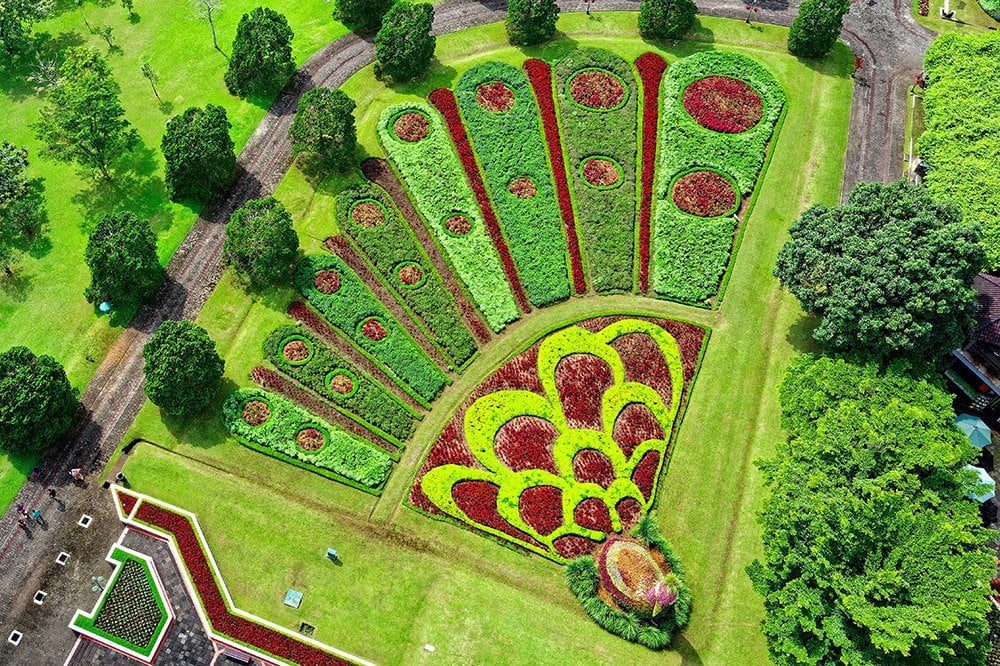
Shape and form are the elements that give a landscape balance and variety, and they carry more weight than any planting decision made later.
Form is what produces a genuine three-dimensional quality on a site. It operates at several scales at once: in the flow between outdoor areas, in the topography of the land itself, and in smaller elements such as hedges, trees, foliage and hardscape structures including retaining walls and outdoor fireplaces.
The design vocabulary around it can feel opaque from outside the profession, which matters because a client who cannot name what they want tends to get something close to it rather than the thing itself. Learning a small amount of that vocabulary is the most efficient way to make a brief precise.
Variety is what stops a landscape reading as dull
A single repeated form flattens a site. Contrast is what gives it depth.
Rounded, organic forms set against a hardscape surface, an outdoor structure or the sharp angles of a building strike a deliberate balance, softening geometry that would otherwise dominate. Rigid forms do the opposite work: low walls and retaining walls impose order and draw a clear distinction between one outdoor area and the next.
The form theme is the first decision to settle with a landscape architect, because it governs the architectural character of everything that follows.
Geometric themes
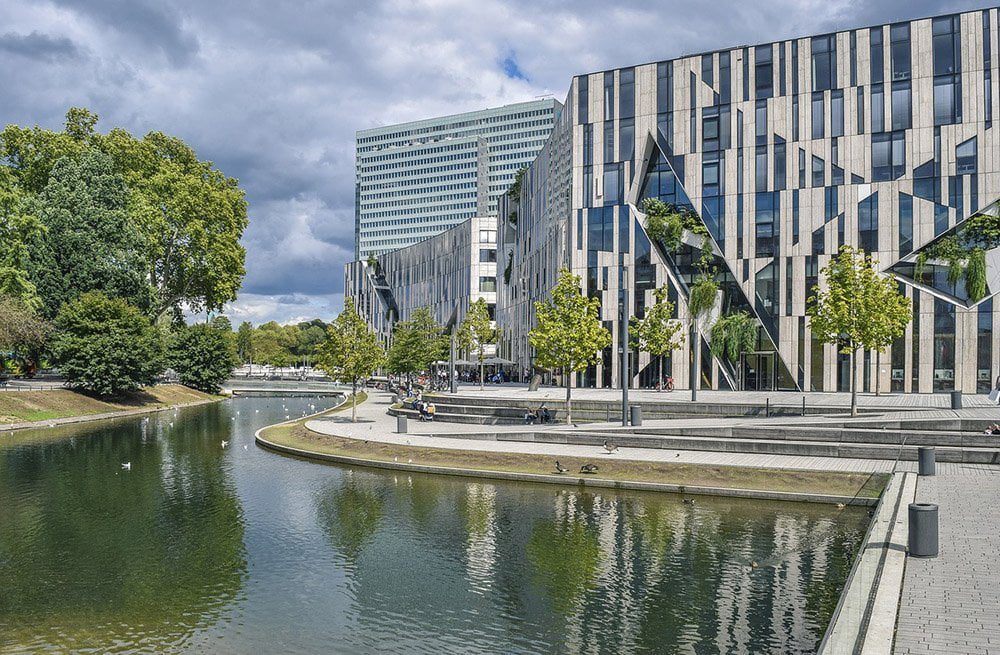
Geometric design relies on clean lines, precise shapes and a systematic underlying order. It is the language of formal landscapes, with carved flowerbeds, clipped hedges and walkways set at right angles.
It also has a modern application that is easy to miss. A strand of contemporary landscape design uses geometry to generate visual interest through shape and form alone, without decorative elements, which suits sites where restraint is the point.
Free form themes
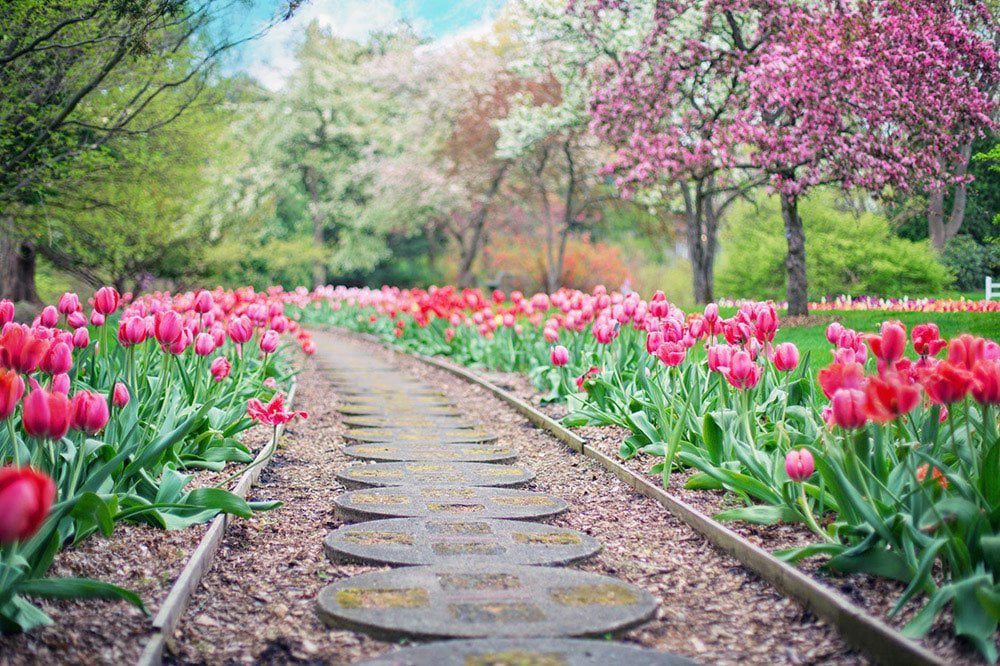
Free form design works towards shapes that appear to have occurred naturally: turning walkways, winding lines, trees and shrubs planted without a fixed pattern, and retaining walls that follow the contour of the land rather than cutting across it.
Architects use it in more relaxed registers, particularly country, cottage and rustic schemes, where visible geometry would read as imposed.
Choosing between them
Neither theme is inherently better, and the decision usually comes from the site rather than from taste.
The architecture is the first consideration. A geometric landscape tends to extend a formal or modernist building, while a free form scheme can soften one. Topography is the second, since a site with significant level change resists rigid geometry and often works better with lines that follow the ground. Use is the third: formal geometry directs movement efficiently, and free form encourages people to slow down and wander.
Most schemes of any size end up using both, with geometry holding the areas closest to the building and the planting loosening as it moves away.
Where the theme meets the ground
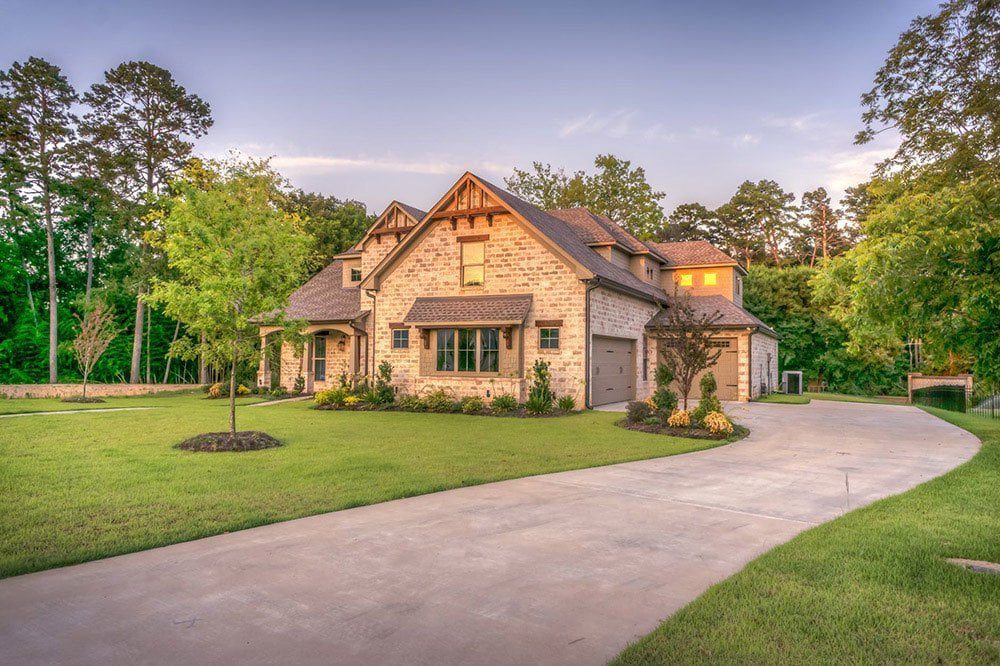
Whichever theme a scheme follows, it is tested at ground level. A geometric landscape exposes every misaligned joint along its lines. A free form landscape shows up anything that looks manufactured.
Drainage is where that most often goes wrong, because a grate specified without reference to the design will interrupt either one. Jonite makes reinforced stone grates from roughly 95% natural aggregates with at least 30% recycled content and less than 1% silica, steel-reinforced for load and finished for slip resistance, with custom patterns developed to follow the geometry of a specific scheme. Get in touch to discuss a design, or request samples to see how the material sits against a paving specification.


