



Anyone who has walked a city street has passed trees planted between the pavement and the kerb without asking what they are for. As global warming becomes more pressing and urban populations keep growing, those few trees are doing considerably more work than their placement suggests.
The pressure cities are under
More than half the world's population now lives in urban areas, and the proportion keeps rising. Municipalities are running short of space and resources to meet demand, and natural ground is cleared to make way for pedestrian routes, new buildings and amenities.
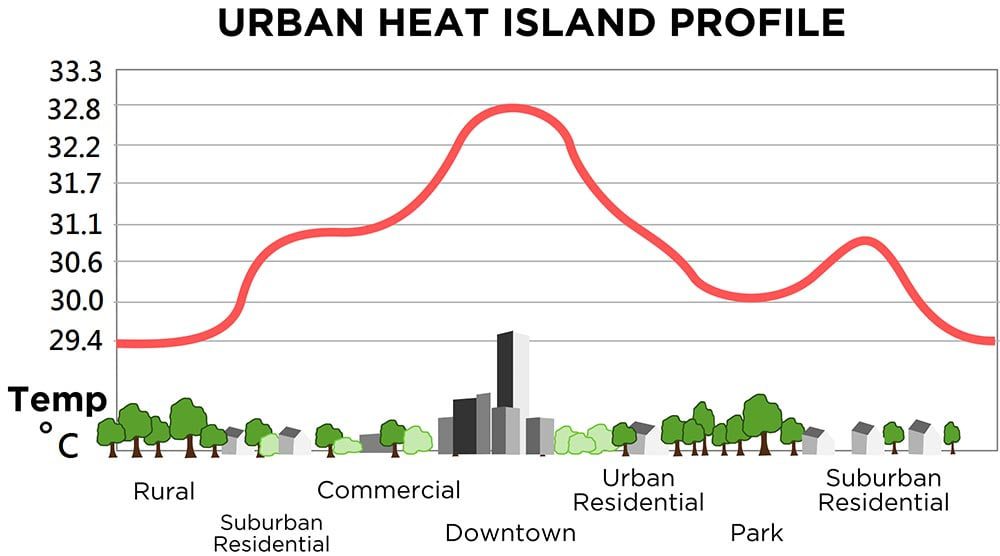
Heat builds up as a direct consequence. Paving and surrounding architecture absorb solar radiation through the day and release it back into the air, and with little greenery to offset it, urban areas become measurably hotter than the land around them. That effect, the urban heat island, shows up in more frequent heat waves, longer dry spells and a rising count of heat-related illnesses in cities worldwide.
Planting trees in dense urban districts is not a complete answer to any of this. It is one of the few interventions that addresses several of the problems at once.
What trees do for the city
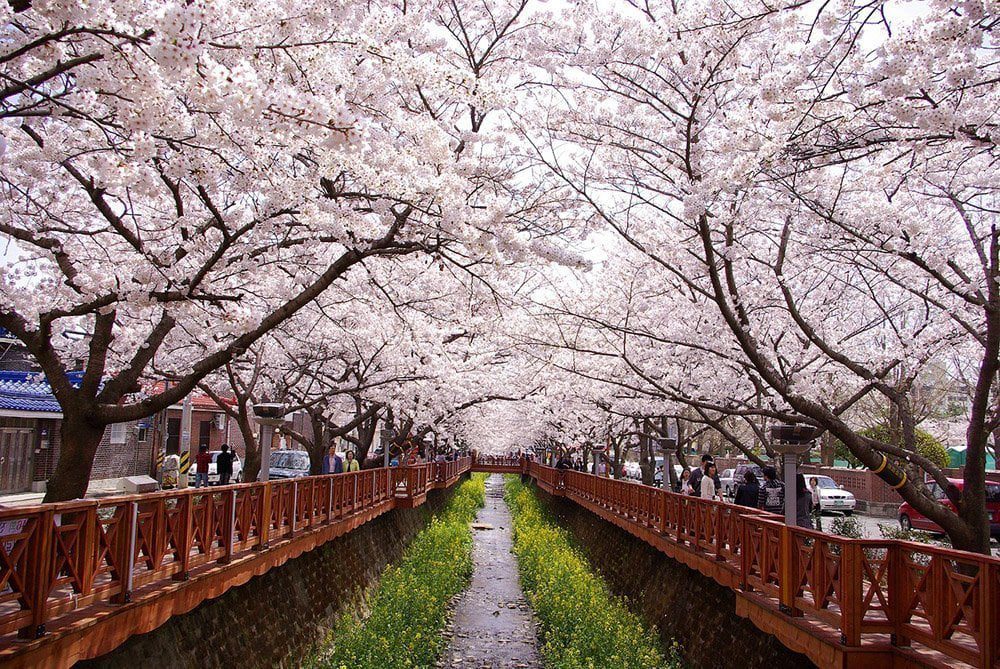
The obvious benefit is the visible one. Trees and planting bring vibrancy to a hard urban landscape, and species that change through the seasons give a street a character that architecture alone cannot. Psychologically the effect is calming, which counts for something in a fast-paced working environment.
The performance benefits are less visible and more valuable.
Cooling
Trees lower surface and air temperatures by shading hard surfaces and through evapotranspiration, and shaded pavement runs far cooler than pavement in full sun. Placement determines how much of that benefit a scheme actually captures, since trees positioned to shade buildings and paving do considerably more than trees planted where there is room for them.
Air quality
Trees absorb carbon dioxide and trap airborne pollutants and particulates. In a district carrying heavy vehicle traffic, a cluster of mature trees makes a real difference to the air at street level, and does so more cost-effectively than most alternatives.
Stormwater
Trees intercept rainfall in their canopies and take up water through their roots, reducing the volume reaching the drainage system in a storm. Paired with well-planned drainage, urban planting is a genuine part of a flood management strategy rather than a decorative addition to one.
What trees do for the people using it
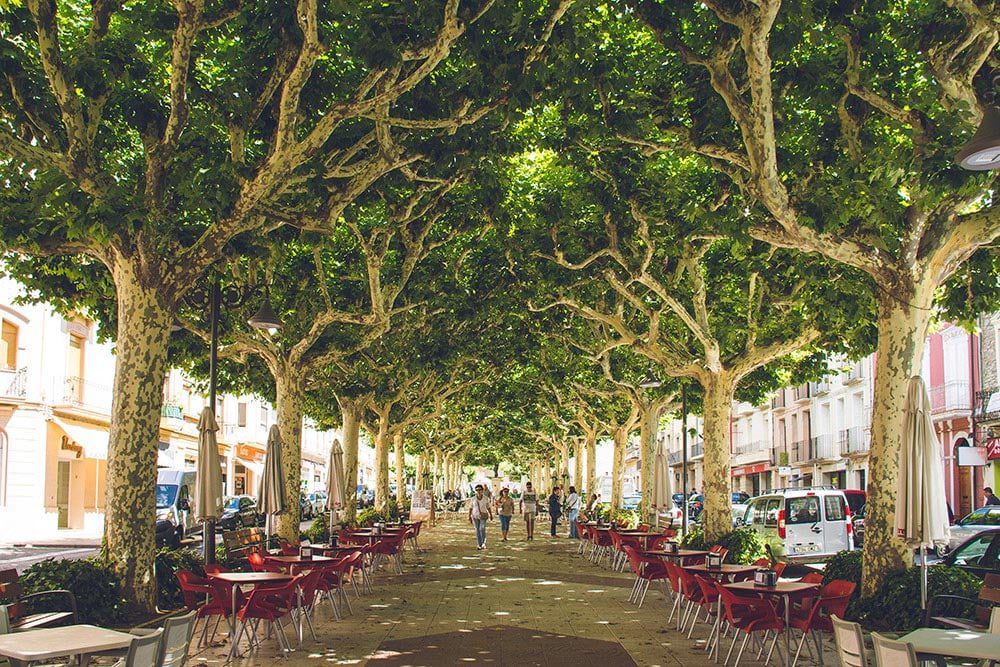
Physical and mental wellbeing both improve where there is greenery in a city. Shade and lower temperatures are the immediate benefit on a hot day. Beyond that, planting has been consistently associated with a less stressful environment, which matters most in the places people pass through before and after work.
Noise is the benefit most often overlooked. Trees buffer traffic and street noise, and a well-planted street is measurably quieter than a bare one.
Wildlife makes use of the habitat as well, which brings biodiversity into districts that would otherwise support very little of it.
The financial case
Urban trees also save money, through a chain of effects that rarely appears in a planting budget.
Cooler streets and shaded buildings reduce energy spent on air conditioning. Fewer heat-related and pollution-related illnesses reduce public health costs. Lower flood risk reduces the cost of dealing with the consequences. Property values near mature planting run higher, and greener districts attract more visitors.
Set against the cost of planting and maintenance, the balance is usually favourable over the life of the trees, which is the timescale that matters.
Making the investment work
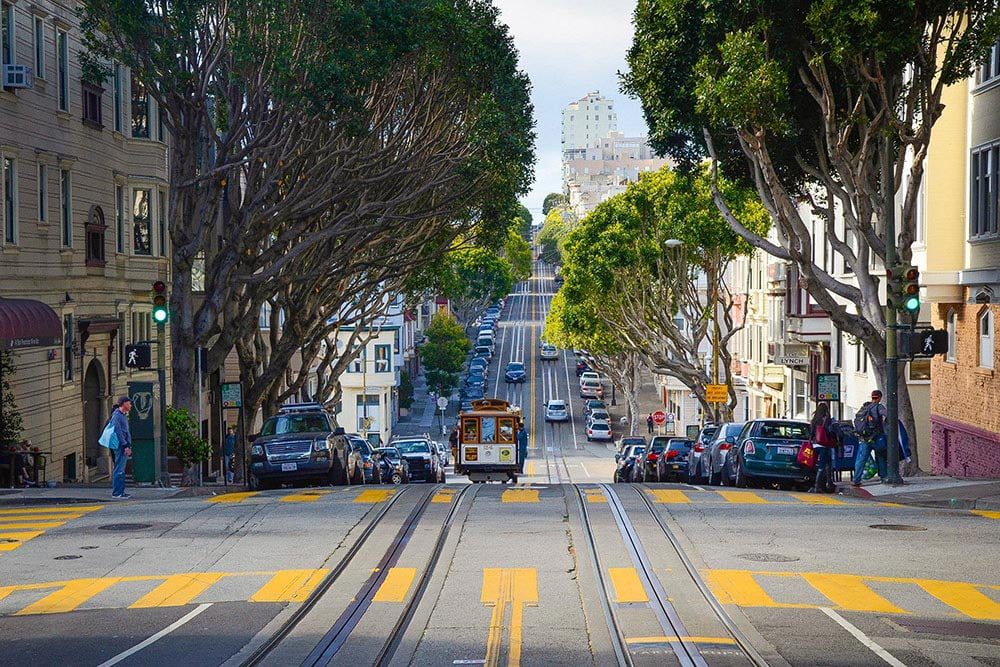
Planting a tree in a city is the easy part. Keeping it alive is where most schemes fail, because urban ground is compacted, water is scarce below the paving, and root systems compete with services and foundations for space.
A range of products exists to give trees the space and resources to establish while keeping the surface usable for everyone else. Tree grates cover the pit at pavement level so pedestrians walk safely over it while air and water still reach the root zone. Paver blocks and permeable pavements do related work across the wider surface, letting water through rather than shedding it into a drain.
Jonite tree grates are made from roughly 95% natural aggregates with at least 30% recycled content and less than 1% silica, steel-reinforced for load and finished for slip resistance, in custom patterns developed to suit the streetscape they sit in. Get in touch to discuss a specification, or browse the case studies for examples in urban developments.
The more trees a city plants and protects, the more of these benefits accumulate, for the people living there and for the wider environment.


