



Architecture has no invention date, which is the honest answer to the question. Building predates any record of it, and the point at which shelter became architecture is a matter of definition rather than of evidence. What can be traced is the sequence: a run of periods and styles, each responding to the one before it, sometimes reviving an older idea and sometimes rejecting it outright.
Dates below are approximate, as they always are with movements that overlapped and travelled at different speeds across regions. The through line is that almost nothing appears from nowhere. Much of what defines the modern era can be traced back to the structures of the Mediterranean, and the sequence runs from the earliest surviving stone to the algorithmic geometry of the present day.
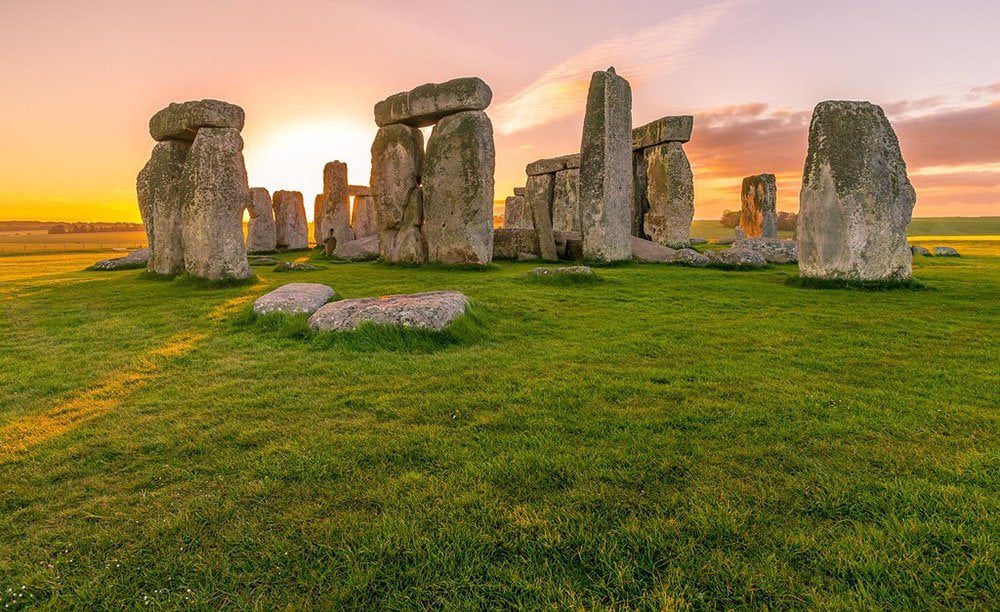
Prehistoric, 11,600 BC to 3,500 BC
Prehistoric architecture is difficult to study because most of it is gone. Fibrous and organic materials do not survive, so what remains is the stone.
That leaves stone circles, megaliths, cliff dwellings and traces of thatch and mud construction. Stonehenge in England is the best known example. Göbekli Tepe in southeastern Anatolia is the more remarkable one, a complex of enclosures built from massive T-shaped limestone pillars carved with snakes, scorpions, lions, bears, foxes and other animals, and predating both agriculture and pottery.
Ancient Egypt, 3,050 BC to 900 BC
Egyptian builders raised temples, shrines and pyramids at a scale that remains an engineering puzzle. How the pyramids were assembled is still debated, with ramp systems the most widely supported explanation.
The defining characteristic is what is missing. Timber barely appears, because the dry climate suited it poorly and supply was scarce. Sun-baked mud brick and limestone carried the work instead.
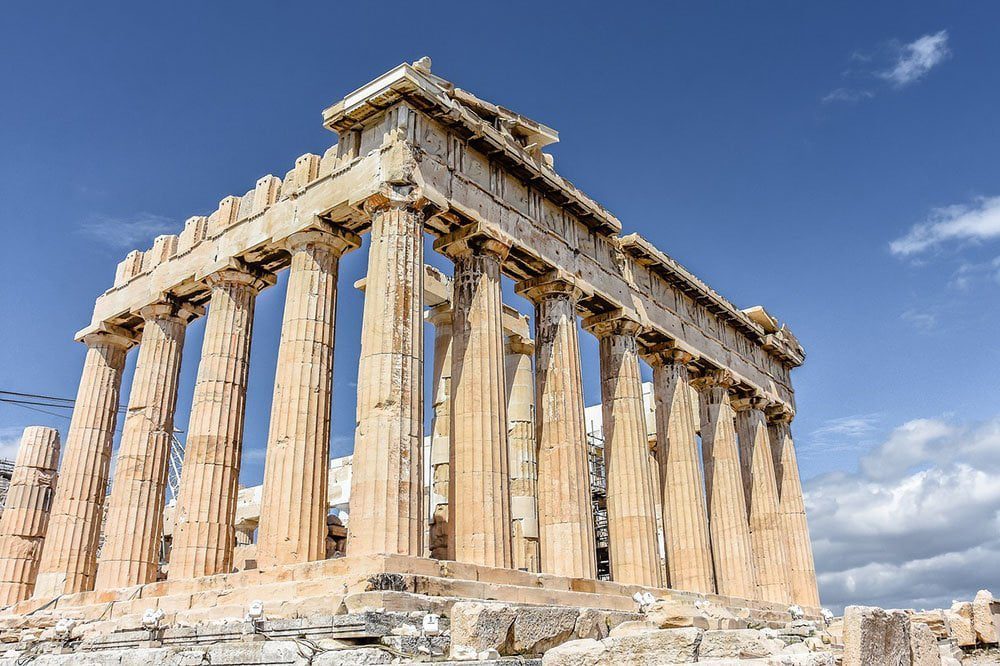
Classical, 850 BC to 476 AD
From the rise of Greece to the fall of Rome, buildings were constructed with a precision that later periods spent centuries trying to recover. Each architectural order is identified by its columns and entablature.
Columns are the most recognisable element. They carry load and they set the character of a building at the same time, and Classical architecture is conventionally described through five orders: Tuscan, Doric, Ionic, Corinthian and Composite. The rules governing them are still taught and still used.
Byzantine, 4th century to 1453
Byzantine architecture developed across the whole life of the Eastern Roman Empire, reaching its most influential phase under Justinian in the sixth century, when Hagia Sophia was built.
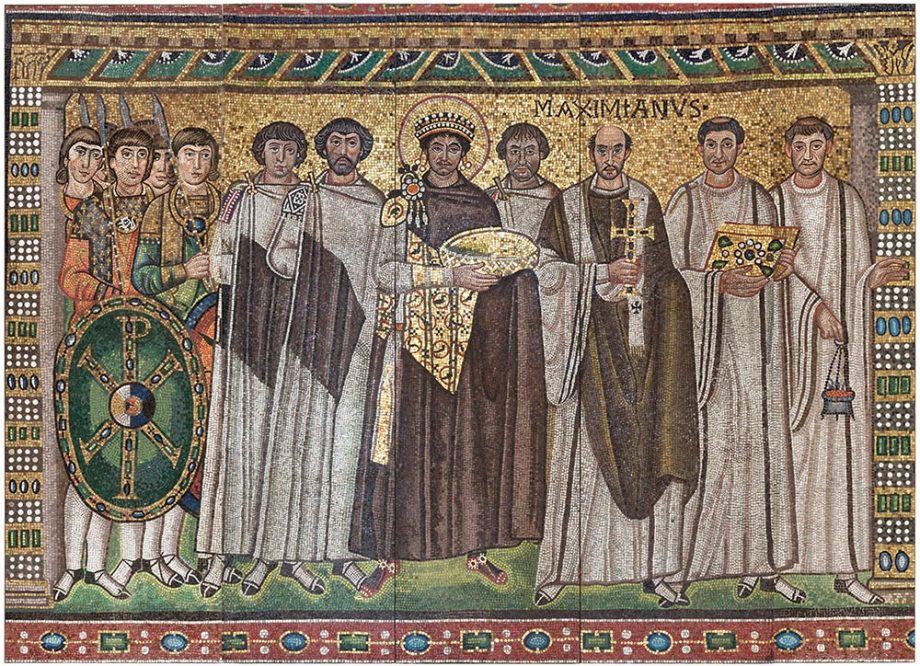
Two features define it: extensive interior mosaic and the height of the dome. Churches were planned on a square central plan following the Greek cross, rather than the Latin cross that later organised Gothic cathedrals, with tall central domes carried on pendentives rising from a square base. Mosaic decoration is abundant, the portrait of Justinian in the Basilica of San Vitale in Ravenna being among the best known. The Classical orders were set aside in favour of forms drawn from further east, including decorative impost blocks.
Romanesque, 800 to 1200 AD
Romanesque followed the spread of Roman culture across Europe, and it is defined by mass. Round arches, groin vaults, thick walls, sturdy piers, large towers and decorative arcading recur through the churches and castles of the period.
Structures are clearly articulated and often symmetrical, restrained next to the Gothic work that followed. The style appeared across Europe with strong regional variation in detail and material. Durham Cathedral in England and Speyer Cathedral in Germany are among the clearest surviving examples.
Gothic, 1100 to 1450 AD
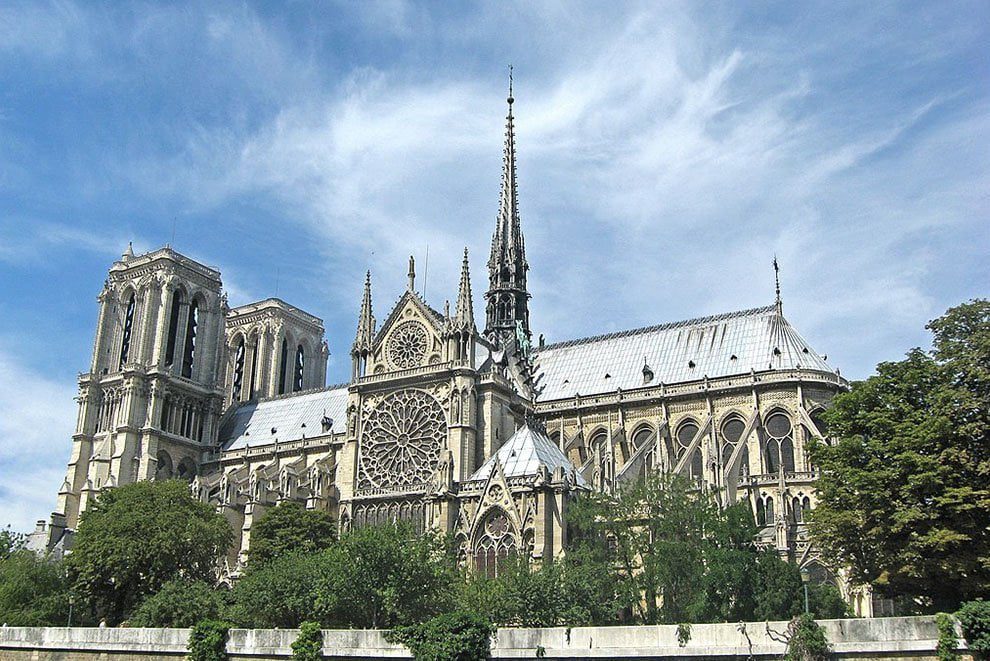
Gothic is associated above all with religious building, and with cathedrals such as Chartres and Notre-Dame de Paris.
Its characteristic elements are ribbed vaulting, flying buttresses and pointed arches, which together redistribute structural stress and allow slimmer columns and piers to carry the load. The result is height and apparent lightness, which is the whole point of the system.
Several of those elements arrived from Islamic architecture. The pointed arch appears in the Dome of the Rock in Jerusalem in the seventh century, several hundred years before it reached European cathedrals.
Renaissance, 1400 to 1600 AD
The Renaissance returned Classical ideas to Italy, France and England. Architects rejected the intricacy and verticality of Gothic in favour of simplicity and balanced proportion.
Rounded arches, domes and the Classical orders came back into use, driven by direct study of Roman ruins alongside the rediscovery of Vitruvius, whose Ten Books on Architecture was the only surviving ancient treatise on the subject.
Baroque, 1600 to 1750 AD
Baroque varies considerably by country. Italy produced elaborate churches with irregular plans and extravagant ornament. France combined that ornamentation with a degree of Classical restraint.
The style is theatrical by intention, generally deployed to demonstrate wealth and power. Painted ceilings, gilding inside and out, rough stone and stucco, and vaulted cupolas are all typical. Where a Renaissance facade is divided into legible sections, a Baroque facade is composed as one continuous surface.
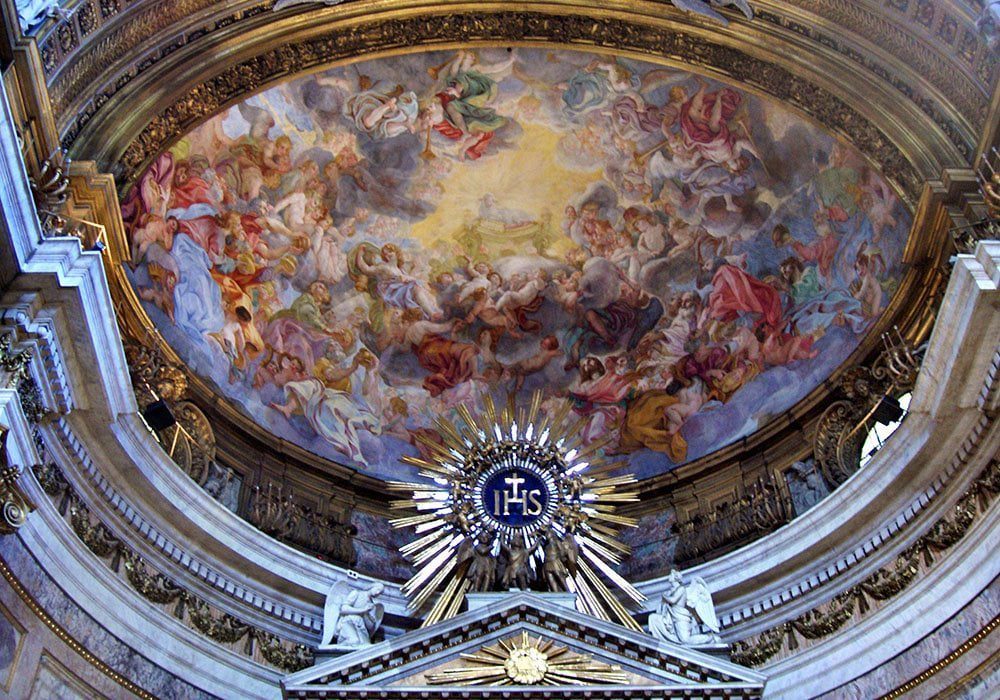
Rococo, 1730 to 1770 AD
Rococo emerged in France and pushed decoration further than Baroque while lightening it considerably.
Its vocabulary is curves and scrollwork, ornament shaped as shells and plants, and oval rooms. Patterns are intricate and finely detailed, the shapes complex and deliberately asymmetrical, and the palette light and pastel with occasional strong accents and a measured amount of gold. It flourished until Neoclassicism displaced it.
Neoclassicism, 1730 to 1900 AD
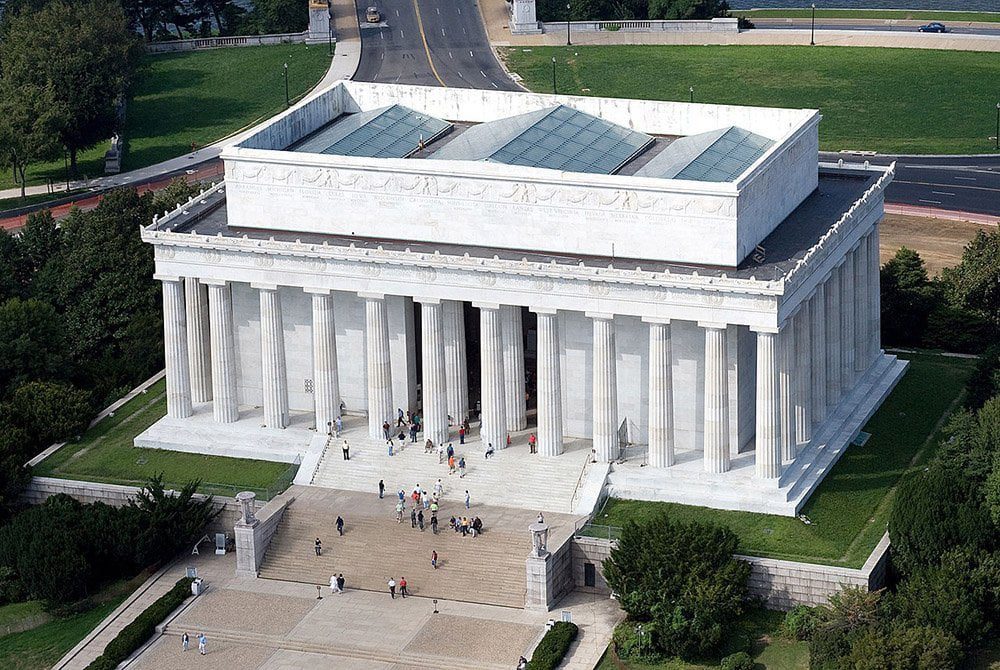
Neoclassicism returned Classical form to Europe, Britain and the United States, drawing both on ancient Greek and Roman precedent and on the Renaissance architect Andrea Palladio, whose work shaped the Palladian strand of the movement.
Buildings are proportioned to the Classical orders, generally symmetrical in plan, with consistent window treatment and tall columns running the full height of the elevation. In residential work, a double portico, a triangular pediment and a central domed roof are common.
Gothic Revival, 1740s to 1900 AD
Gothic reappeared in Britain from the mid-eighteenth century and became dominant through the nineteenth, spreading across Europe and North America. Gargoyles, pointed windows and medieval detailing returned, at first as decoration applied to otherwise contemporary buildings.
The movement divides in two. Early Gothic Revival borrowed Gothic elements for their appearance, retained a good deal of Neoclassical massing, drew mainly on English precedent, and freely used imitations of natural materials. Later, more rigorous Gothic Revival worked from the structural principles underneath the style, took French and German examples as models, and rejected imitation materials and applied paint finishes as dishonest.
Art Nouveau, 1890 to 1914 AD
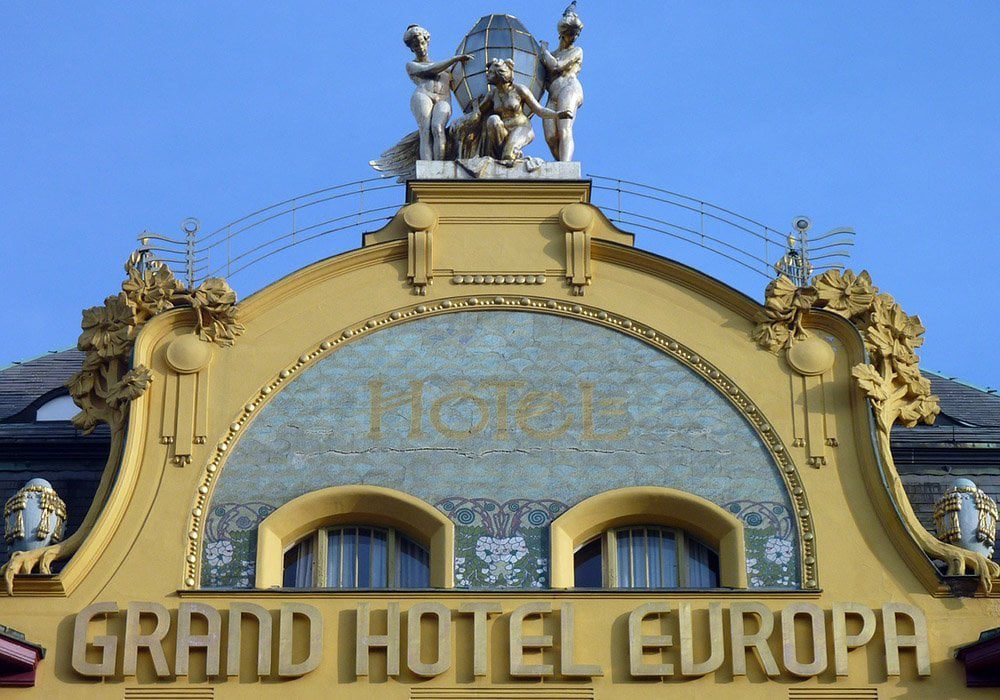
Art Nouveau began in textile and graphic design before reaching architecture and furniture in the 1890s.
It is defined by asymmetry, arches and decorative surfaces carrying curved, plant-derived forms. Buildings appear to swell and undulate out of the ground. Lines stretch and then snap back on themselves, a motif known as the whiplash curve, which became the movement's signature.
Beaux-Arts, 1885 to 1925 AD
Beaux-Arts is defined by order, symmetry and dense ornamentation. The buildings are large, built in stone, with flat or low-pitched roofs and symmetrical facades carrying Greek and Roman detail.
Balustraded balconies, heavy decorative columns, arched windows and grand arched entrances are standard, finished with pediments above. Ornament is extensive, including carved low-relief panels and cartouches, which are ornamental frames or tablets, usually oval and often carrying an inscription or emblem. Garlands, swags and medallions run across the elevations. Interiors, particularly in government buildings, tend towards high vaulted ceilings and central domes.
Art Deco, 1925 to 1940 AD
Art Deco uses bold geometry, zigzags and strong colour across furniture, textiles, ceramics, sculpture and buildings. Many of its motifs derive from ancient Egyptian sources.
Like Modernism it favours clean lines and restrained decoration, and it found its natural home in entertainment buildings and in the interiors of luxury hotels, restaurants and apartments. Lighting is integral rather than added, with neon strip lighting used to reinforce the geometry.
Modernist styles, 1900 to the present
The twentieth and twenty-first centuries have produced the widest range of architecture in history, and Modernism has moved in and out of favour throughout.
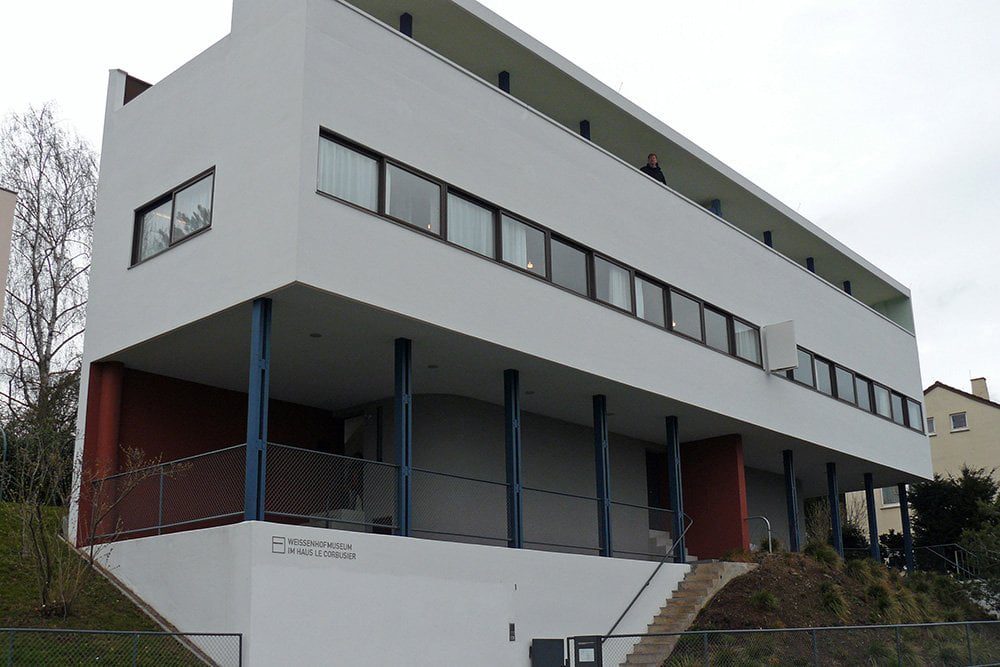
Its principles are simplicity of form, abstraction, clean lines and basic geometric volumes. The Weissenhof Estate in Stuttgart, built in 1927 with contributions from Le Corbusier, Mies van der Rohe and others, is the clearest early demonstration: cubic volumes, flat roofs and no applied ornament.
Postmodernism, 1972 to the present
Postmodernism was a direct reaction against Modernist orthodoxy, reintroducing historical detail and familiar motifs that Modernism had stripped out.
Its practitioners draw on no single source, combining elements from several periods within one building, which makes it the most eclectic movement here. The results are frequently decorative and deliberately playful, and the movement inverted the Modernist priority by putting form ahead of function. Michael Graves's Portland Building and Philip Johnson's AT&T Building are the standard examples.
Neo-Modernism and Parametricism, 21st century
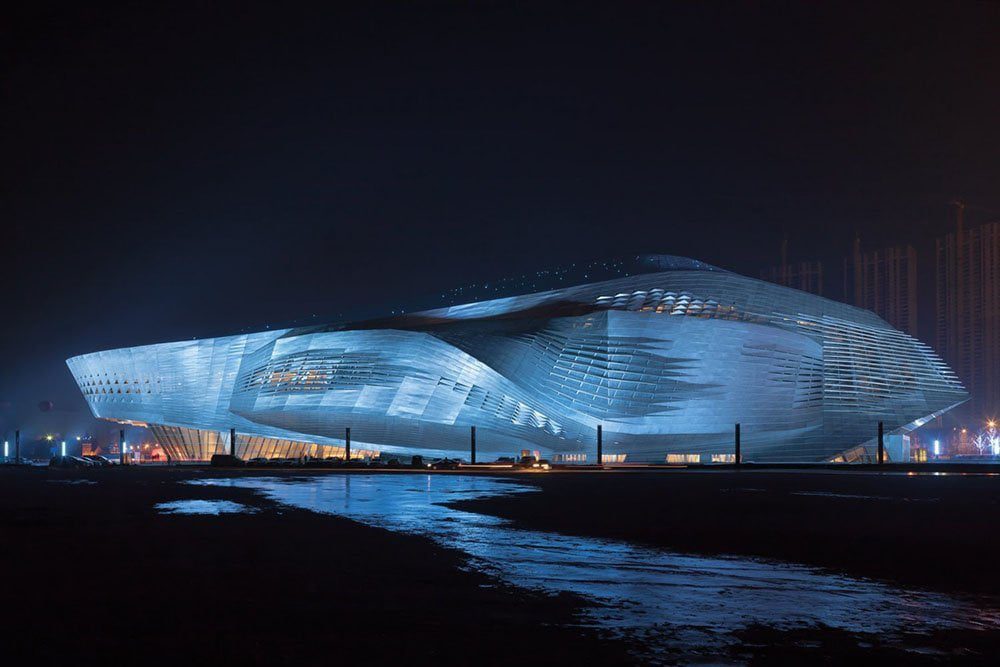
Neo-Modernism covers a broad range of contemporary work, from Frank Gehry's sculpted forms to blobitecture, where buildings take organic, amoeba-like shapes.
Parametricism is the more distinct development, an approach generated through computer modelling and algorithms. It emerged from digital animation techniques in the mid-1990s and came to prominence in the early 2000s as parametric design tools matured. The curved, non-rectilinear buildings of the last two decades are largely its product.
What the sequence shows
Read end to end, the pattern is consistent. Every movement here either extends its predecessor or reacts against it, and the elements that survive are the ones that solved a problem rather than the ones that looked impressive. The pointed arch travelled from Jerusalem to Chartres because it worked. The Classical orders keep returning for the same reason.
That principle still applies at the scale of a single component. Jonite makes reinforced stone grates, tree grates and sump covers from roughly 95% natural aggregates with at least 30% recycled content and less than 1% silica, steel-reinforced for load and finished for slip resistance, with custom patterns developed to suit the architectural language of a specific project rather than imposing one. Get in touch to discuss a custom design, or browse the case studies to see the approach across periods and building types.


