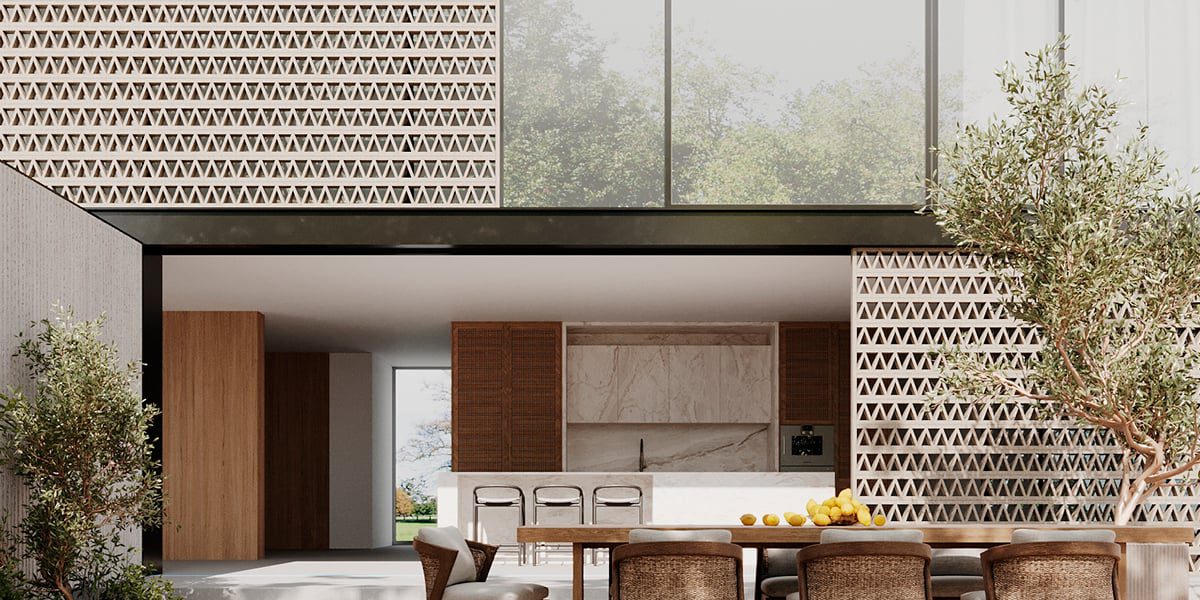
Breeze blocks are a familiar building material, but their name doesn't come from their hollow spaces — it traces back to a composite added to solid blocks in the late 1800s. The composite “coke breeze” is the true origin of the name.
The term "breeze block" is predominantly used in the UK, Australia, New Zealand and other areas. In the United States, they are typically referred to as "screen blocks" or "decorative blocks." This guide will look at what makes this construction material unique from all others.
Breeze Blocks History
Breeze blocks, also known as screen blocks, have a fascinating history that dates back over a century. Breeze blocks in their hollow form were first introduced in the early 1900s as a solution for a robust, durable and affordable building material. At the time, traditional brick and stone were the primary building materials used for construction. But they were expensive and time-consuming to produce.
Early to Mid-1900s
Initially, builders used breeze blocks primarily for industrial and commercial buildings, such as factories and warehouses. Over time, breeze blocks began to be used in residential construction, as well, as people recognized their benefits and versatility.
Frank Lloyd Wright created several houses using the breeze block designs during the 1920s, including Ennis House, the last and largest of Frank Lloyd Wright's collection of "textile block" houses. Wright built the house in 1924 for Charles Ennis and his wife, Mabel. The house consists of over 27,000 concrete blocks.
The screen block lineage: Edward Durell Stone
Running alongside Wright's structural “textile block” houses, American architect Edward Durell Stone popularised the ventilated concrete screen block on a much larger stage: his “Empress” screen block pattern, most famously used on the 1959 US Embassy in New Delhi, brought the perforated masonry screen into mainstream mid-century commercial architecture worldwide. It's this lineage — the screen wall used for shade, privacy and airflow rather than as a structural element — that most of today's decorative breeze blocks, including Jonite's own collections, actually descend from. Read the full history.
Post-War And Beyond
Breeze blocks also played a significant role in the post-World War II building boom. They were an affordable and easy-to-use building material during the economic recovery. The blocks were still appearing in 1962 as George Barris did a photo shoot with Marilyn Monroe using a breeze block wall for the composition.
Modern breeze blocks are still often used in areas of high heat. Their spaces allow air to circulate and light in while still creating privacy.
Types of Breeze Blocks
Breeze blocks include textured, decorative and screen blocks, which can add aesthetic interest to a space. Understanding the different types of breeze blocks can help architects and engineers choose the best block for each project based on its unique requirements and design goals:
- Solid breeze blocks: Solid breeze blocks are made from solid concrete or stone and are the most basic type. They are ideal for load-bearing walls and structures. They are also suitable for soundproofing, as they provide excellent acoustic insulation.
- Hollow breeze blocks: These are similar to solid breeze blocks, but they have hollow cores that make them lighter and easier to handle. The open spaces within the blocks also provide excellent thermal insulation.
- Patterned breeze blocks: You can characterize these by their intricate patterns and shapes, including diamond, herringbone and zigzag. Architects use patterned breeze blocks to create interesting visual effects in building facades, as well as in landscaping and furniture design.
- Colored breeze blocks: The blocks are colored during manufacturing or painted after installation.
Explore each of Jonite's breeze block collections in detail: Modubloc, Vista, Prism, Tessera and Molecules.
Breeze blocks vs. cinder blocks vs. concrete blocks
The three terms get used interchangeably, but they aren't the same thing. A concrete block — also called a concrete masonry unit (CMU) — is a solid, structural block used in load-bearing walls, foundations and other structural elements. A cinder block is a specific type of concrete block made with cinder (fly ash or bottom ash) as the aggregate, almost always used for the same structural purposes.
A breeze block is a different category: a decorative, ventilated concrete or stone masonry unit with an open or patterned face, designed for airflow, light and visual interest rather than load-bearing structure. Most breeze blocks on the market today, including generic concrete versions, aren't rated for structural use — which is where Jonite's reinforced stone breeze blocks differ: they're structural load certified to ASTM C140, suitable for load-bearing or structural architectural applications where the design calls for it
Common Breeze Block Applications
Breeze block uses and applications create a unique aesthetic that can add visual interest to any space. Their resistance to pests, fire and water makes them a practical choice.
Load-bearing Walls
A load-bearing wall supports the weight of the structure above it and helps distribute the weight of the building and keeps it stable. To use breeze blocks in this space, take advantage of their strength and durability, as they are ideal for support. You can use them for single-story and multi-story buildings in conjunction with steel framing to provide additional support.
Jonite's reinforced stone breeze blocks are structural load certified to ASTM C140, which is what makes this kind of load-bearing specification possible — see our installation guide for facade height limits and structural support requirements.
Retaining Walls
Breeze blocks have high compressive strength and withstand heavy loads and pressure without breaking or cracking. The blocks are ideal for retaining walls that must hold back soil or other materials, which can exert significant pressure on the wall. Additionally, they are ideal for outdoor applications, as they are durable and resistant to weathering and erosion.
Decorative Walls
Due to their casting molds, you can create intricate designs with breeze blocks. During the mid-century, it was popular to do this and create distinctive and retro walls and screens. These screens were often placed around outdoor living spaces such as patios or pool areas, creating a seamless connection between indoor and outdoor living spaces.
Interior of the Building
The hollow design naturally leans itself to play with light and shadow outside. But the blocks can also be used within a building to create a division or detail in interior spaces. Try them in places like:
- Fireplaces: You can use the blocks to decorate around fireplaces, as they are highly resistant to heat and fire. They can also be painted or coated with heat-resistant finishes.
- Stairs: Breeze block's unusual hollow design can create a unique staircase that plays with light as you go up.
- Privacy screens: These blocks provide privacy while allowing natural light to enter the space.
- Water features: Their porous nature allows water to flow through breeze blocks, creating a soothing sound and adding visual interest to the space.
Benefits of Breeze Blocks
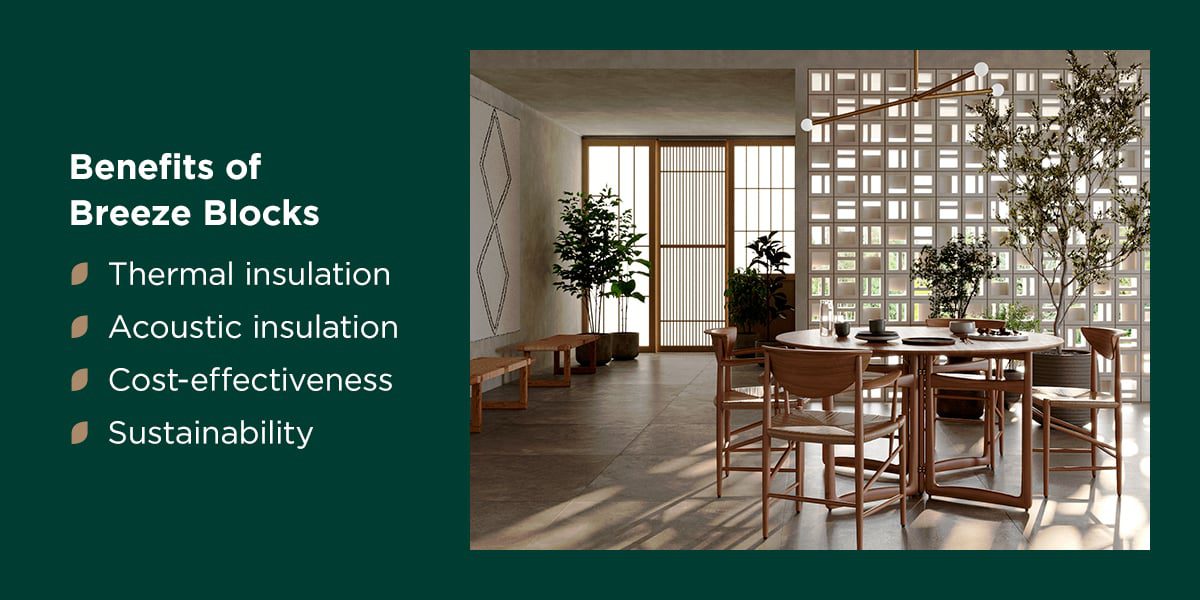
A breeze block's shape, size and composition have plenty of benefits, like its natural resistance to fire or the need for fewer blocks when you use larger ones. The size also reduces the number of joints in the wall, making it stronger and less likely to crack or fail.
Another benefit is their hollow design, which makes them lighter and easier to handle. Other benefits of these blocks include:
- Thermal insulation: Breeze blocks have excellent thermal insulation properties, which can help to reduce heating and cooling costs in buildings. The hollow cores of breeze blocks provide an insulating barrier that helps keep the interior of a building at a consistent temperature.
- Acoustic insulation: More solid breeze blocks also provide acoustic insulation. The blocks are porous, which helps to absorb sound waves, reducing the amount of sound that passes through the wall. Combining their pores with their size and mass reduces sound waves from passing through the wall.
- Cost-effectiveness: These blocks are made from simple and affordable raw materials such as cement, sand and water. Compared to other building materials, such as bricks or solid natural stone, the raw materials for breeze blocks are generally less expensive. Because of their size, builders can lay more quickly, reducing labor costs and overall construction time.
- Sustainability: Breeze blocks are environmentally friendly, as they are made from locally sourced materials, and property owners can recycle the blocks at the end of their life span. Using breeze blocks in construction can contribute to earning green building certifications, such as Leadership in Energy and Environmental Design (LEED) or Building Research Establishment Environmental Assessment Methodology (BREEAM).
- Compliance & durability: Jonite breeze blocks carry a Class 1 Fire Rating (BS 476 Part 7 surface spread of flame), structural load certification to ASTM C140, salt spray durability testing to ASTM B117 and water absorption testing to SS245:1995 — tested performance most generic decorative breeze blocks can't point to.
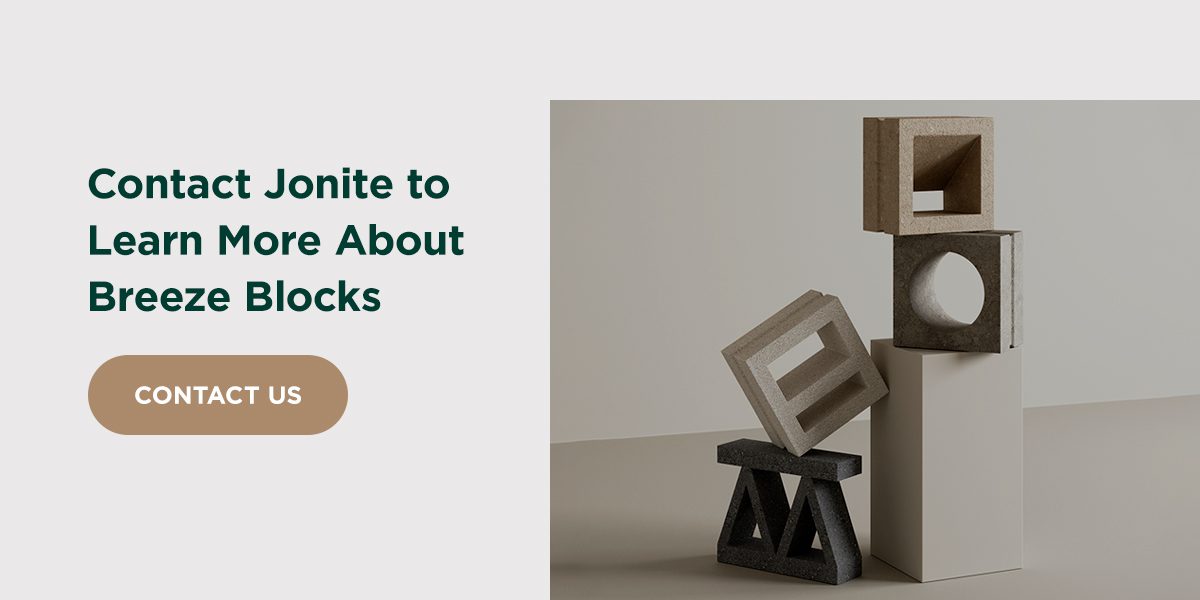
Contact Jonite to Learn More About Breeze Blocks
Reinforced stone breeze blocks are fortified with stone aggregates such as granite, marble and limestone. They are known for their high compressive strength and pleasing aesthetic quality due to their natural stone aggregates.
Jonite will soon expand into the creation of reinforced stone breeze blocks. They can be made in different sizes and shapes and even molded to create unique and intricate designs. This flexibility in design makes them a popular choice for architects and engineers who want to create distinctive and visually appealing buildings.
Contact us to learn more about customized blocks to suit specific project requirements.